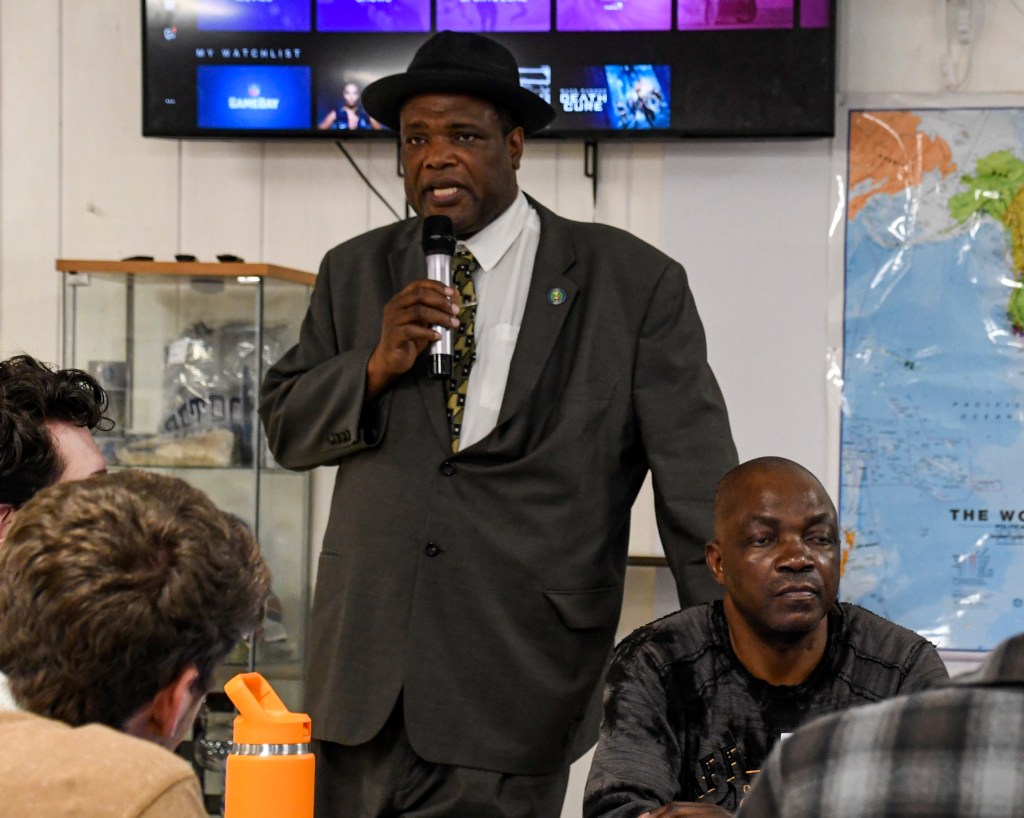
Grand Rapids, MI — Over 50 people gathered Wednesday night May 15, 2025, at Hero’s Shero’s Corner for a grassroots meet-and-greet with the Lyoya family—three years after 26-year-old Patrick Lyoya was killed by a Grand Rapids police officer during a traffic stop gone violently wrong. The event, organized by community members and activists, offered space for collective grief, shared struggle, and renewed demands for justice.
“We and the Lyoya family are the working-class families that will continue to stand up until change has come,” echoed one of the grassroots organizers to the room of supporters. “No matter how dark the night, we can rebuild the day. Step by step, voice by voice, in peace, together.”
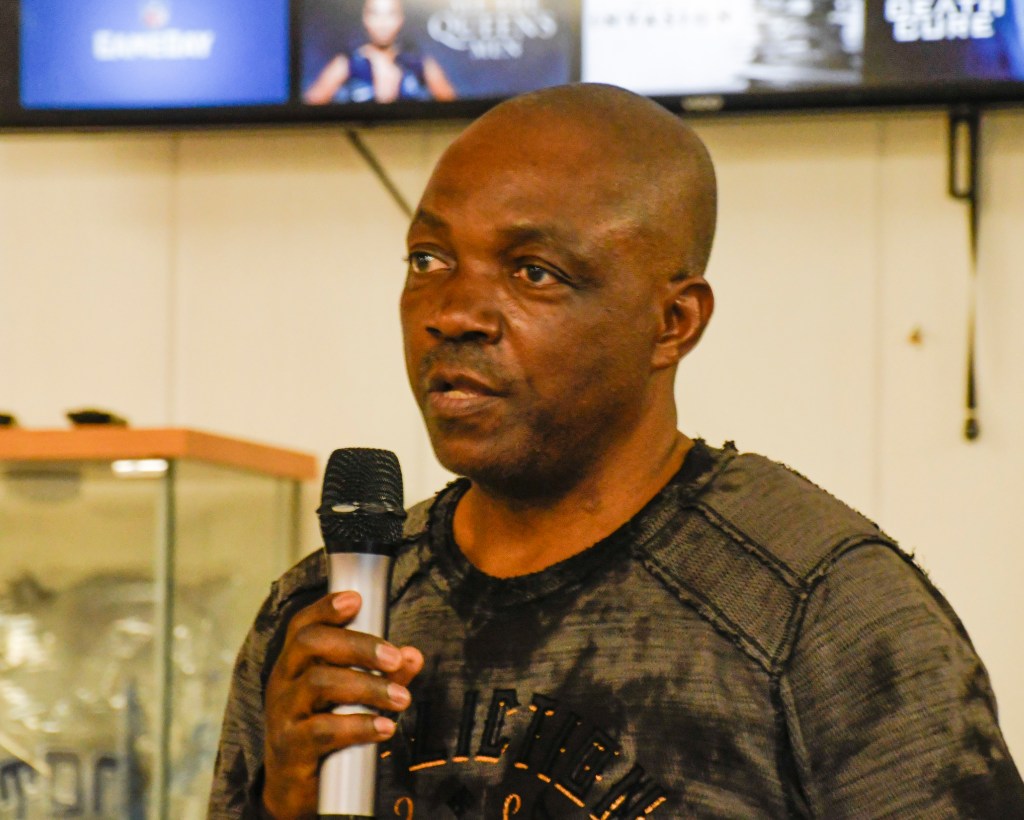
Peter Lyoya, Patrick’s father, stood before the crowd with heavy emotion in his voice.
“My son is three years underground,” he said. “And the man who killed him is still with his family. That is not justice.”
The recent trial against Officer Christopher Schurr ended in a hung jury. Though Schurr was not acquitted, he also was not convicted, leaving the Lyoya family devastated and community members frustrated.
“We were heartbroken,” Peter continued. “But we will not stop. We will keep fighting until there is justice for Patrick.”
The gathering was as much a vigil as it was a rally. Speakers included Robert S. Womack, Kent County Commissioner, who praised Peter Lyoya for his courage and resilience.
“There were many days I didn’t know how Peter kept going,” said Womack. “This has been a traumatic ordeal for the family—to have to watch that video again and again in court… It’s unbearable. But Peter has not stopped. None of us have.”
Womack noted that conversations with local officials about police reform are ongoing, but emphasized the importance of community-led efforts.
“This was not just a meet-and-greet,” Womack said. “This was about building solidarity. Healing for the family. And it was about saying: ‘Where do we go from here?’”
Members of the Grand Rapids Alliance Against Racist and Political Repression reiterated their demands for an immediate retrial of Officer Schurr and the dismissal of charges against local activists arrested during protests.
“We showed up every day during the trial—bringing water, snacks, support, whatever was needed,” said a representative. “We’ll continue to show up—not just for the Lyoya family but for every family impacted by police violence in Grand Rapids.”
Tom Burke, president of the local stagehands union and co-chair of the local May Day committee, didn’t hold back.
“This trial was a farce. Justice wasn’t served,” said Burke. “If one of us killed a cop, we’d be locked up in seconds. But when the roles are reversed, it takes three years to even get to court—and the system still fails us.”
Burke called for broader systemic reforms, including community control of the police, pointing to reforms happening in places like Chicago, where elected civilian oversight boards are beginning to reshape local policing.
Former Kent County Commissioner and State Senate candidate Ivan Diaz was blunt in his criticism of the justice system, the city leadership, and the culture of policing.
“If it can happen to Patrick, it can happen to any of us,” Diaz warned. “This is about systems of oppression—about a police department that believes it can be judge, jury, and executioner.”
Diaz recounted recent protests, during which police used bicycles to push peaceful demonstrators and even flipped a wheelchair-bound activist. He described being pepper-sprayed while filming the protest live on social media.
“Some of our officials are waiting for the trial to finish before they change policy,” he said. “But we can’t wait. Every day we delay is another day a tragedy could occur.”
Diaz outlined specific policy failures revealed during the trial—such as a lack of requirements to warn suspects before shooting, and no clear guidelines for foot pursuits.
“You can say your policies ‘respect the sanctity of human life’ all you want,” Diaz said. “But if those policies still allow officers to kill without warning, nothing has changed.”
Several speakers connected Patrick Lyoya’s death to broader movements for racial justice, immigrant rights, and working-class solidarity.
“This isn’t just about Patrick,” said Tom Burke. “It’s about every system that preys on poor people, on Black people, on immigrants.”
Burke spoke of the historical legacy of racist policing and the need for community power—not just performative politics.
“These politicians—we can’t rely on them to do the right thing,” he said. “They’ll listen to us and then break our hearts. But we have the power to build movements that change everything.”
He recalled meeting organizer Israel Siku at the first protest in Boston Square after Patrick’s death, and the long journey it’s taken to even get the case to trial.
“I told Israel it would take two years to get justice, and here we are three years later,” Burke said. “But we’re still here. And we’ll keep being here.”
Peter Lyoya closed the event with simple, powerful words.
“I don’t know if justice exists in America,” he said. “But I know we will keep fighting. For my son. For your sons. For all of us.”
The room responded in unison:
“Justice for Patrick. Justice for Patrick. Justice for Patrick”
The Lyoya family, along with their community of supporters, continues to demand a retrial of Officer Schurr and substantive reform within the Grand Rapids Police Department.
But more than anything, they are demanding to be heard—not as an afterthought, but as participants in shaping the systems that govern their lives.
“We are the voices with boots on the ground,” one speaker declared. “We may never be allowed at the table of the bourgeoisie—but we’ll build our own table, and we’ll make it louder.”
If you want to support the Lyoya family or stay updated on justice efforts in Grand Rapids:**
Follow the Grand Rapids Alliance Against Racist and Political Repression
Attend upcoming City Commission meetings and rallies
Demand transparency and accountability from local officials
As the community chanted Wednesday night:
“No justice, no peace.”
And they mean it.
 Media Works of John Rothwell