No Retrial in Grand Rapids Police Shooting Case: Prosecutor Cites Jury Deadlock, Legal Realities

Grand Rapids, MI –  05-22-25 Kent County Prosecutor Chris Becker announced today that his office will not pursue a retrial in the high-profile murder case against former Grand Rapids Police Officer Christopher Schurr, citing a clear trend in the jury’s leanings and significant challenges with jury selection. The controversial decision effectively closes a case that has gripped the Grand Rapids community and reignited debates around police accountability and justice system fairness.

The initial trial ended in a hung jury, with the final tally showing 10 jurors voting for acquittal and only two favoring conviction. Becker described the progression of the jury’s deliberations in detail, explaining how it moved from an even 4-4 split to 7-5, and ultimately to a strong 10-2 in favor of not guilty. “When we looked at those numbers, it was clear that the odds of a conviction in a second trial were extremely low,” Becker said during a press conference.

Becker added that over the past six years, the prosecutor’s office has encountered 15 hung juries, and of those, only one case was retried—a case he described as “very strong”—yet even that retrial failed to produce a guilty verdict. “We do not take these decisions lightly,” Becker emphasized. “But we must base them on the law, on the facts, and what we believe we can prove beyond a reasonable doubt.”

One of the key factors in the decision not to retry the case was the difficulty of securing an impartial jury. Becker explained that the original trial involved striking 43 jurors for cause and using 10 primary challenges to remove those perceived as problematic. Of the potential jurors evaluated, at least 15 showed visible or admitted bias, and 30 were flagged as problematic. Despite these efforts, Becker acknowledged the near impossibility of eliminating all individuals with ties to law enforcement in a case involving a police officer.

“Jury selection is one of the most critical components of a fair trial,” Becker said. “But in this case, it was incredibly difficult to find jurors who didn’t come in with some level of bias or strong opinion.”

The community response to the decision was swift and passionate. Some called for a retrial, arguing that the lack of a conviction doesn’t mean justice was served. Others supported Becker’s decision, viewing the jury’s 10-2 vote as indicative of reasonable doubt.

Becker acknowledged the community’s deep emotions on both sides of the case. “I’ve heard from many people, and I respect the intensity of their opinions,” he said. “But this decision was not about appeasing anyone. It was based on what the evidence could support in a courtroom, not on public pressure or sending a message.”

He added that while he sympathized deeply with the victim’s family and the broader community, it would be irresponsible to spend more time, resources, and emotional energy on a case unlikely to result in a different outcome.

With the decision not to retry, Christopher Schurr will remain free, and the case will be officially closed. Becker made clear that the option of reducing the charge was not considered, stating that the office either had the evidence to support the original charge or it did not.

The prosecutor also reflected on the toll the case has taken—not just on the legal system, but on the families involved and the broader community’s trust in justice. “This was a difficult, emotional, and high-stakes case,” he said. “We spent significant time and resources preparing it. But our job is not to win at all costs. Our job is to pursue justice—where it can be fairly and legally obtained.”

The outcome has sparked discussion about the broader implications for similar cases involving law enforcement officers. Becker noted that cases involving police conduct face unique challenges, from jury bias to community polarization. He emphasized the need for continued vigilance in ensuring unbiased jury selection and transparent prosecutorial decisions.

“Every decision we make must reinforce the public’s trust in the system,” he concluded. “Even if the result is unsatisfying to some, our responsibility is to uphold the law—not to bend it under pressure.”

As Grand Rapids moves forward, the case will undoubtedly leave a lasting impact on the community’s relationship with its legal system. And while no retrial will take place, the questions it raised—about justice, accountability, and fairness—are unlikely to fade anytime soon.
Community Gathers in Solidarity with Lyoya Family as Calls for Justice Grow Louder in Grand Rapids

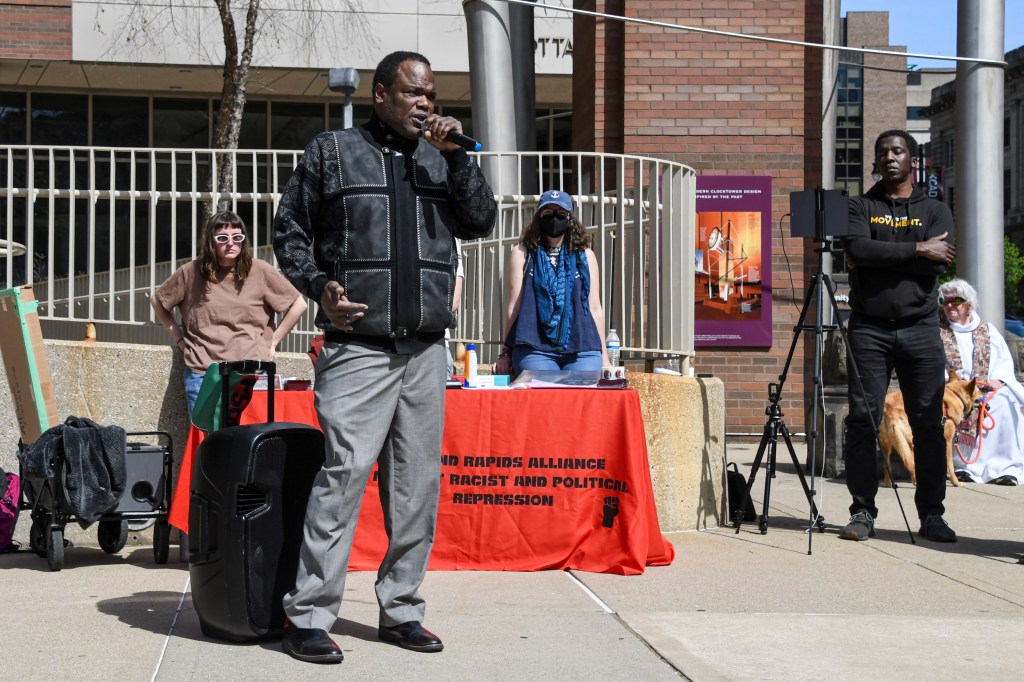
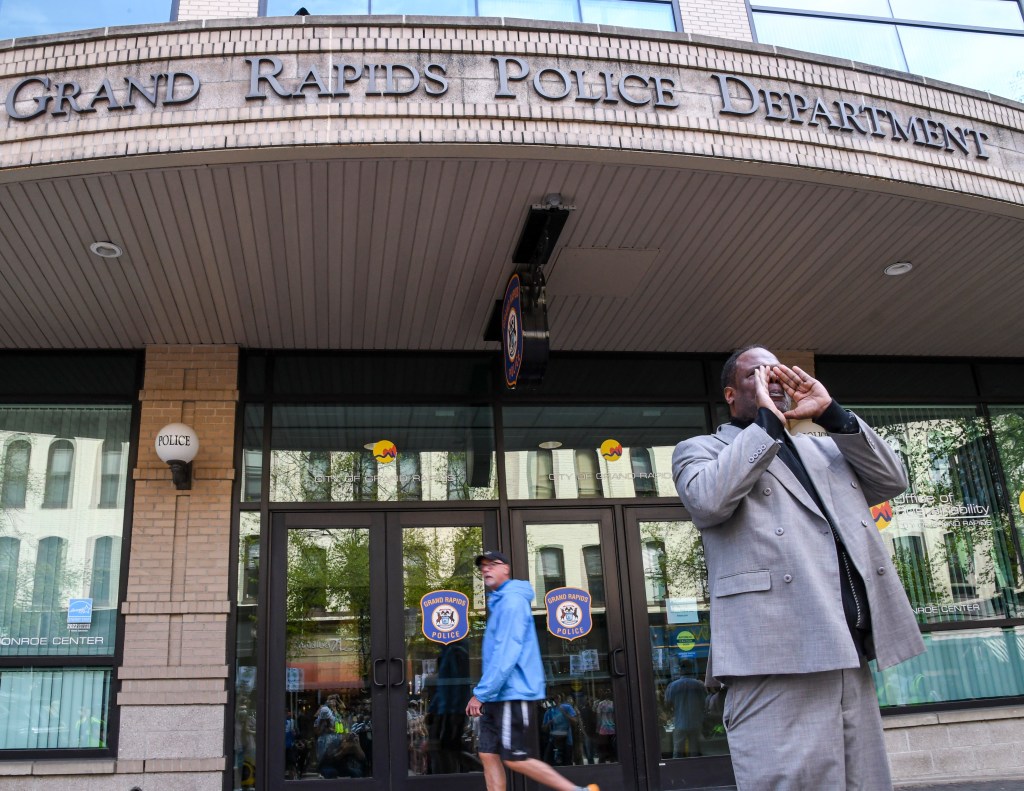
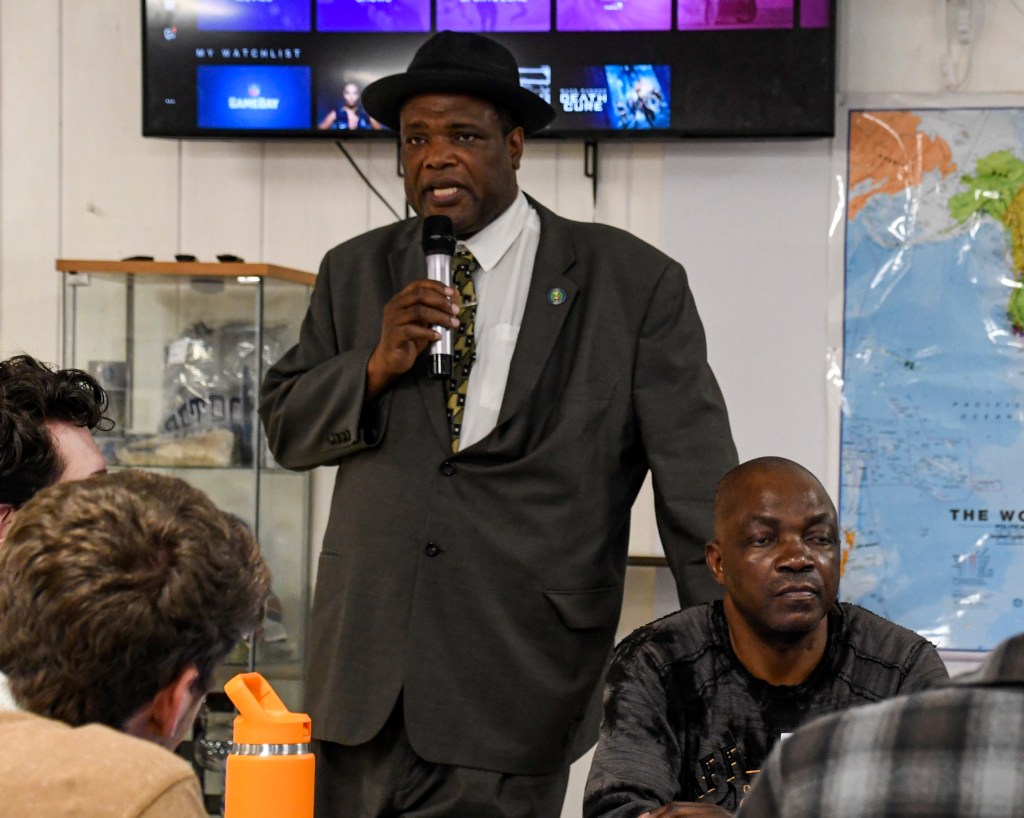
Robert S Womack addressing the crowd at the Meet and Great with the Lyoya family

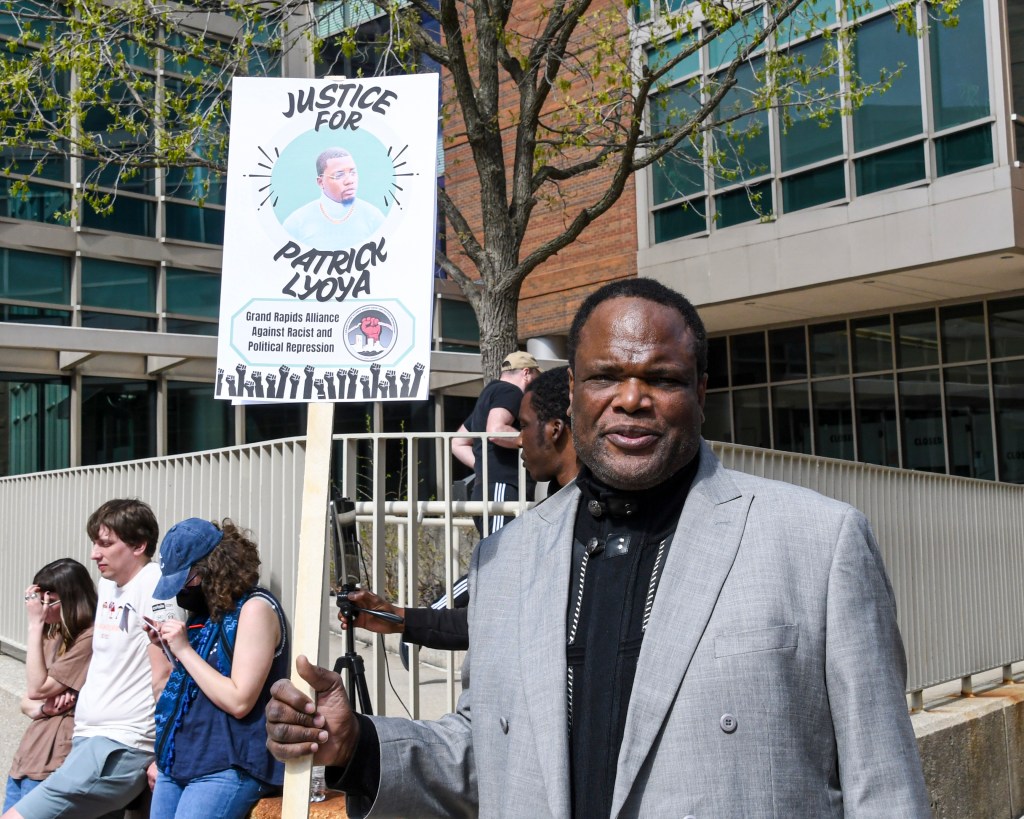
Grand Rapids, MI — Over 50 people gathered Wednesday night May 15, 2025, at Hero’s Shero’s Corner for a grassroots meet-and-greet with the Lyoya family—three years after 26-year-old Patrick Lyoya was killed by a Grand Rapids police officer during a traffic stop gone violently wrong. The event, organized by community members and activists, offered space for collective grief, shared struggle, and renewed demands for justice.

“We and the Lyoya family are the working-class families that will continue to stand up until change has come,” echoed one of the grassroots organizers to the room of supporters. “No matter how dark the night, we can rebuild the day. Step by step, voice by voice, in peace, together.”

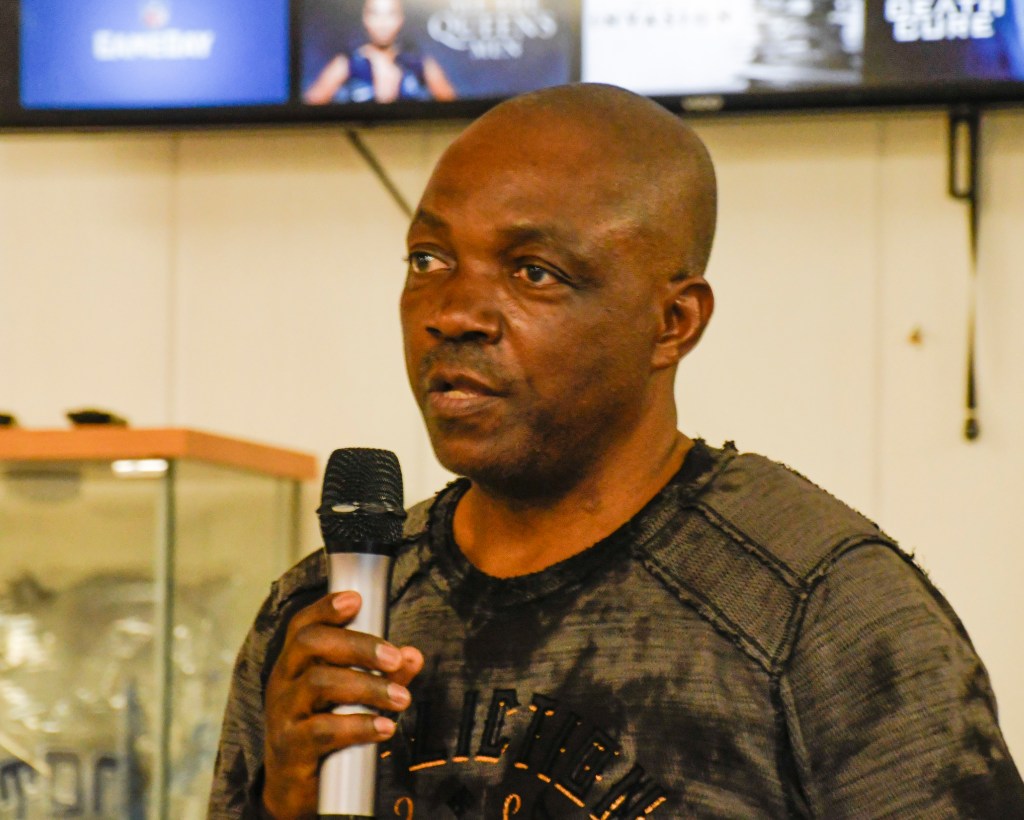
Peter Lyoya, Patrick’s father, stood before the crowd with heavy emotion in his voice.

“My son is three years underground,” he said. “And the man who killed him is still with his family. That is not justice.”

Peter Lyoya Father of Patrick speaking at a meet and great for the family

The recent trial against Officer Christopher Schurr ended in a hung jury. Though Schurr was not acquitted, he also was not convicted, leaving the Lyoya family devastated and community members frustrated.

“We were heartbroken,” Peter continued. “But we will not stop. We will keep fighting until there is justice for Patrick.”

The gathering was as much a vigil as it was a rally. Speakers included Robert S. Womack, Kent County Commissioner, who praised Peter Lyoya for his courage and resilience.

“There were many days I didn’t know how Peter kept going,” said Womack. “This has been a traumatic ordeal for the family—to have to watch that video again and again in court… It’s unbearable. But Peter has not stopped. None of us have.”

Womack noted that conversations with local officials about police reform are ongoing, but emphasized the importance of community-led efforts.

“This was not just a meet-and-greet,” Womack said. “This was about building solidarity. Healing for the family. And it was about saying: ‘Where do we go from here?’”

Members of the Grand Rapids Alliance Against Racist and Political Repression reiterated their demands for an immediate retrial of Officer Schurr and the dismissal of charges against local activists arrested during protests.

“We showed up every day during the trial—bringing water, snacks, support, whatever was needed,” said a representative. “We’ll continue to show up—not just for the Lyoya family but for every family impacted by police violence in Grand Rapids.”

Tom Burke, president of the local stagehands union and co-chair of the local May Day committee, didn’t hold back.

“This trial was a farce. Justice wasn’t served,” said Burke. “If one of us killed a cop, we’d be locked up in seconds. But when the roles are reversed, it takes three years to even get to court—and the system still fails us.”

Burke called for broader systemic reforms, including community control of the police, pointing to reforms happening in places like Chicago, where elected civilian oversight boards are beginning to reshape local policing.

Former Kent County Commissioner and State Senate candidate Ivan Diaz was blunt in his criticism of the justice system, the city leadership, and the culture of policing.

“If it can happen to Patrick, it can happen to any of us,” Diaz warned. “This is about systems of oppression—about a police department that believes it can be judge, jury, and executioner.”

Diaz recounted recent protests, during which police used bicycles to push peaceful demonstrators and even flipped a wheelchair-bound activist. He described being pepper-sprayed while filming the protest live on social media.

“Some of our officials are waiting for the trial to finish before they change policy,” he said. “But we can’t wait. Every day we delay is another day a tragedy could occur.”

Diaz outlined specific policy failures revealed during the trial—such as a lack of requirements to warn suspects before shooting, and no clear guidelines for foot pursuits.

“You can say your policies ‘respect the sanctity of human life’ all you want,” Diaz said. “But if those policies still allow officers to kill without warning, nothing has changed.”

Several speakers connected Patrick Lyoya’s death to broader movements for racial justice, immigrant rights, and working-class solidarity.

“This isn’t just about Patrick,” said Tom Burke. “It’s about every system that preys on poor people, on Black people, on immigrants.”

Burke spoke of the historical legacy of racist policing and the need for community power—not just performative politics.

“These politicians—we can’t rely on them to do the right thing,” he said. “They’ll listen to us and then break our hearts. But we have the power to build movements that change everything.”

He recalled meeting organizer Israel Siku at the first protest in Boston Square after Patrick’s death, and the long journey it’s taken to even get the case to trial.

“I told Israel it would take two years to get justice, and here we are three years later,” Burke said. “But we’re still here. And we’ll keep being here.”

Peter Lyoya closed the event with simple, powerful words.

“I don’t know if justice exists in America,” he said. “But I know we will keep fighting. For my son. For your sons. For all of us.”

The room responded in unison:

“Justice for Patrick. Justice for Patrick. Justice for Patrick”

The Lyoya family, along with their community of supporters, continues to demand a retrial of Officer Schurr and substantive reform within the Grand Rapids Police Department.

But more than anything, they are demanding to be heard—not as an afterthought, but as participants in shaping the systems that govern their lives.

“We are the voices with boots on the ground,” one speaker declared. “We may never be allowed at the table of the bourgeoisie—but we’ll build our own table, and we’ll make it louder.”

If you want to support the Lyoya family or stay updated on justice efforts in Grand Rapids:**

Follow the Grand Rapids Alliance Against Racist and Political Repression

Attend upcoming City Commission meetings and rallies

Demand transparency and accountability from local officials

As the community chanted Wednesday night:

“No justice, no peace.”

And they mean it.

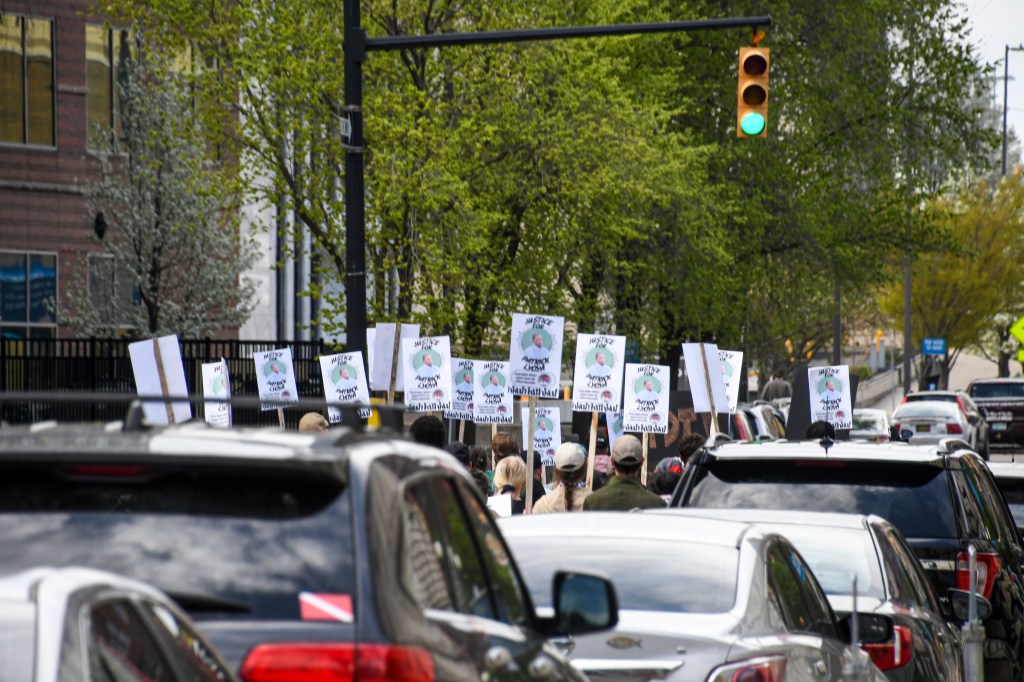
Protesters Demand Justice for Patrick Lyoya Ahead of Officer’s Murder Trial

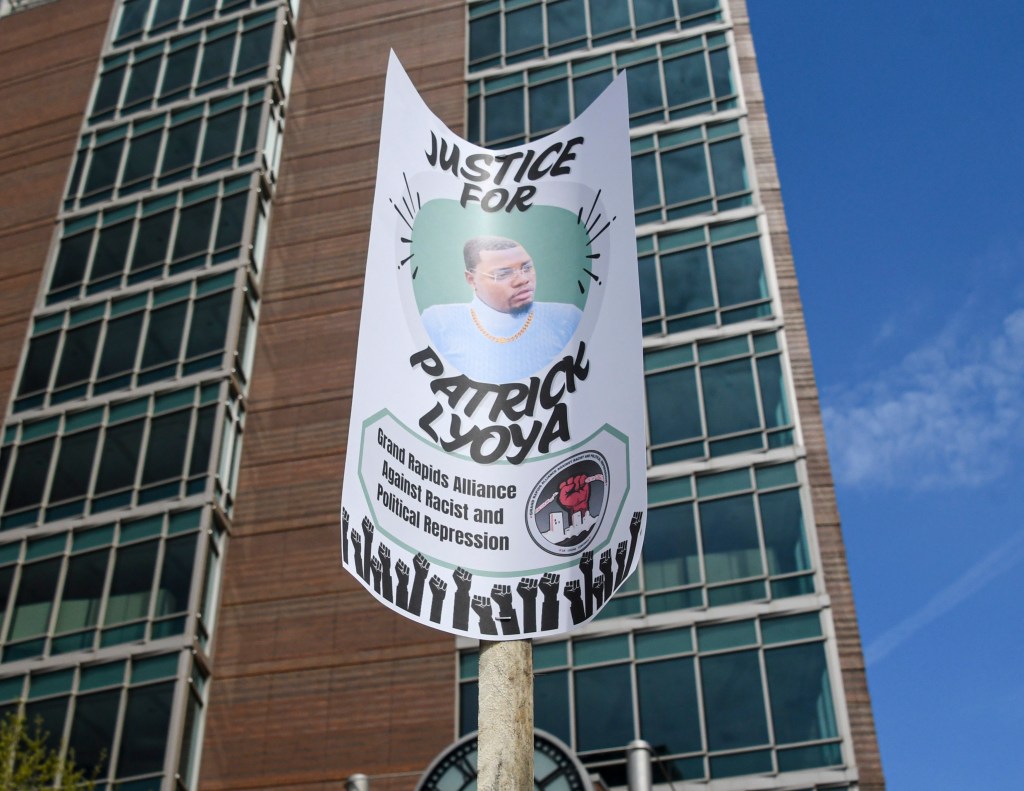
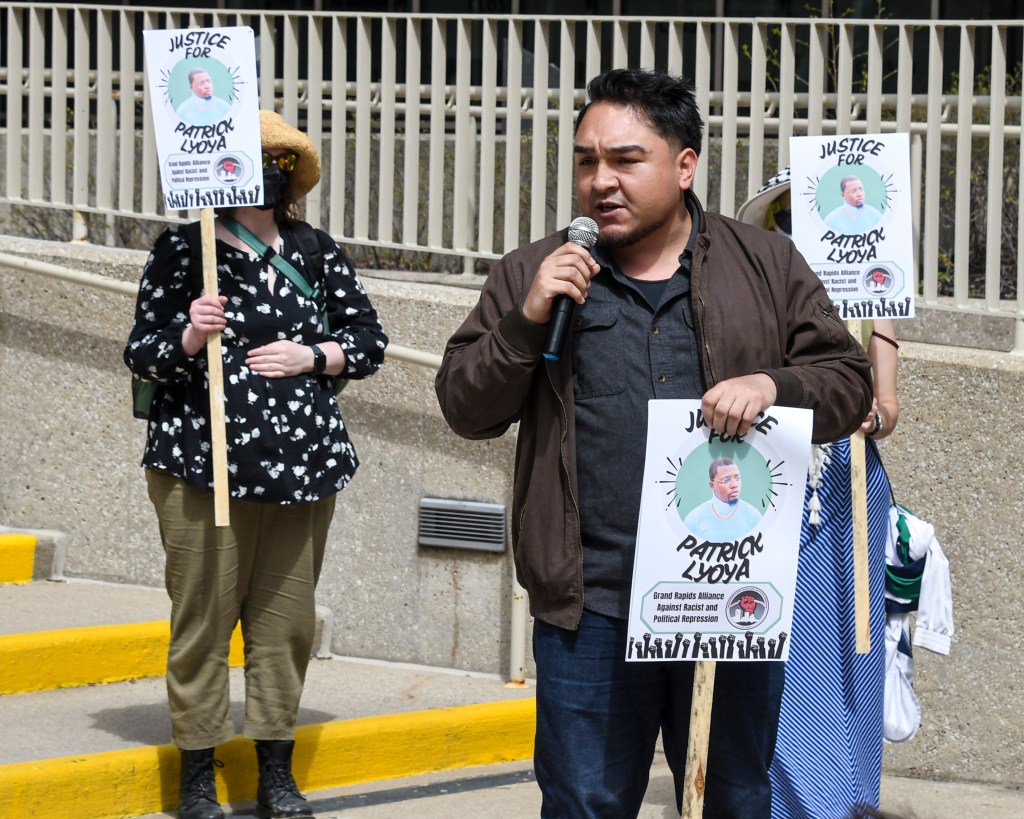
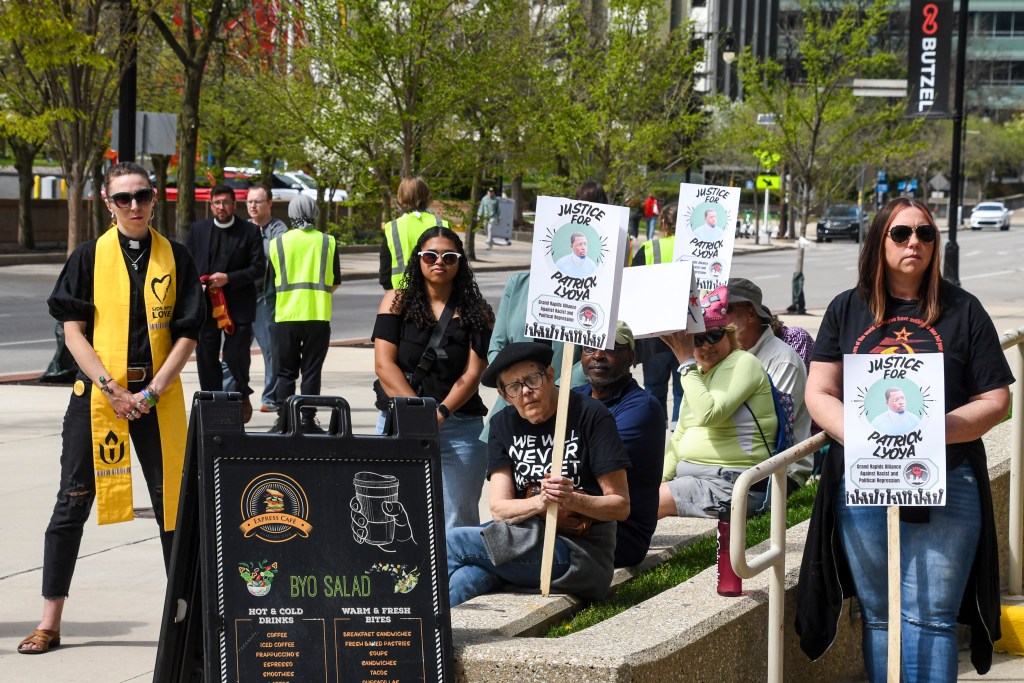
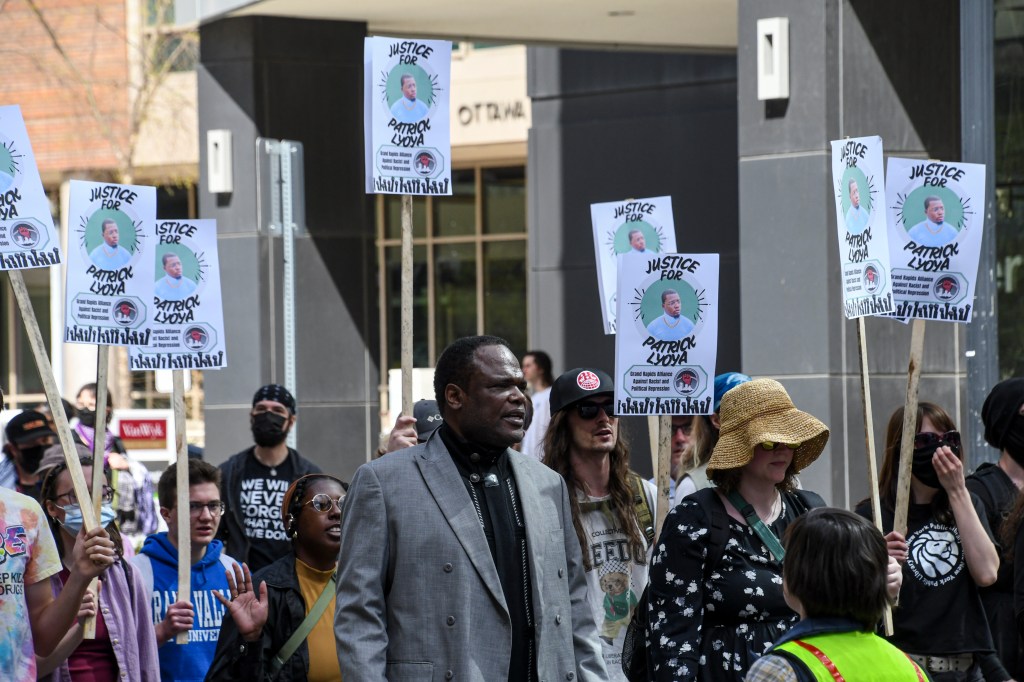
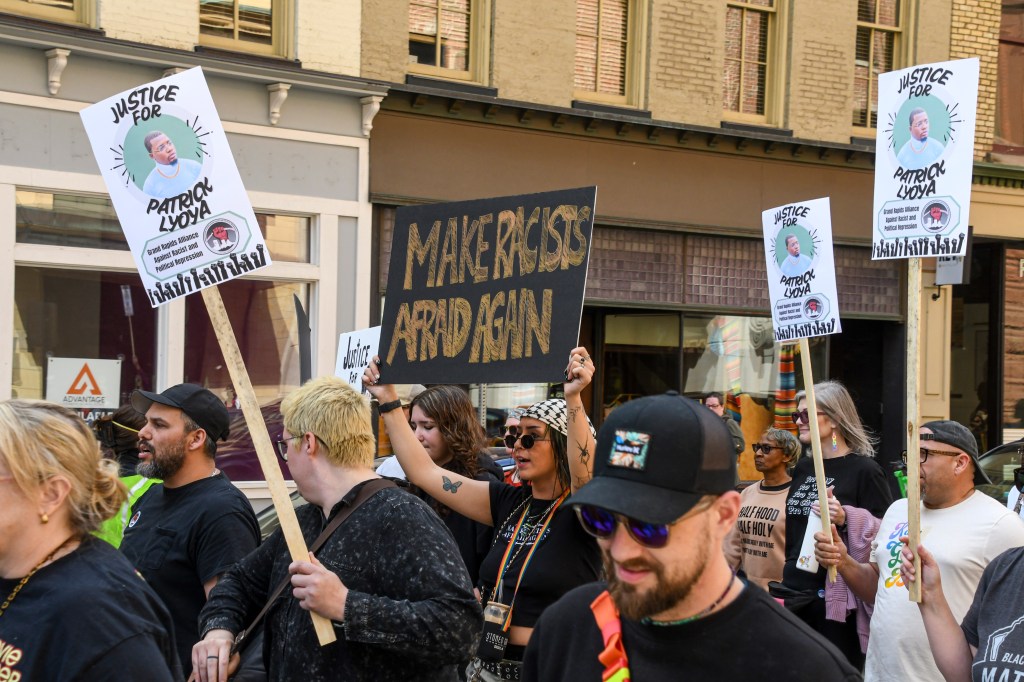
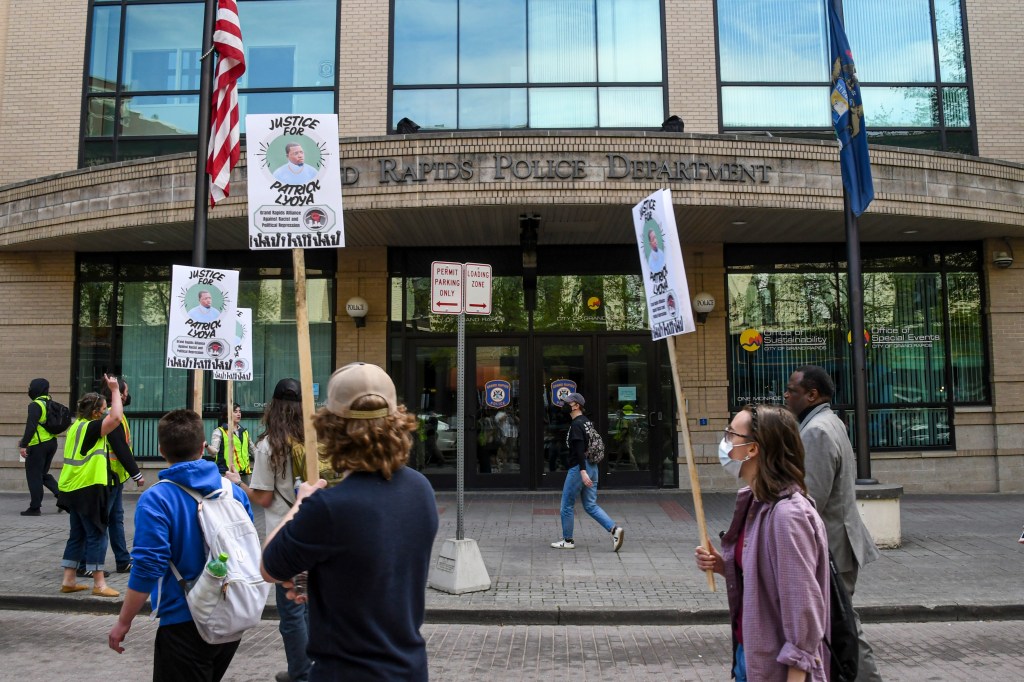
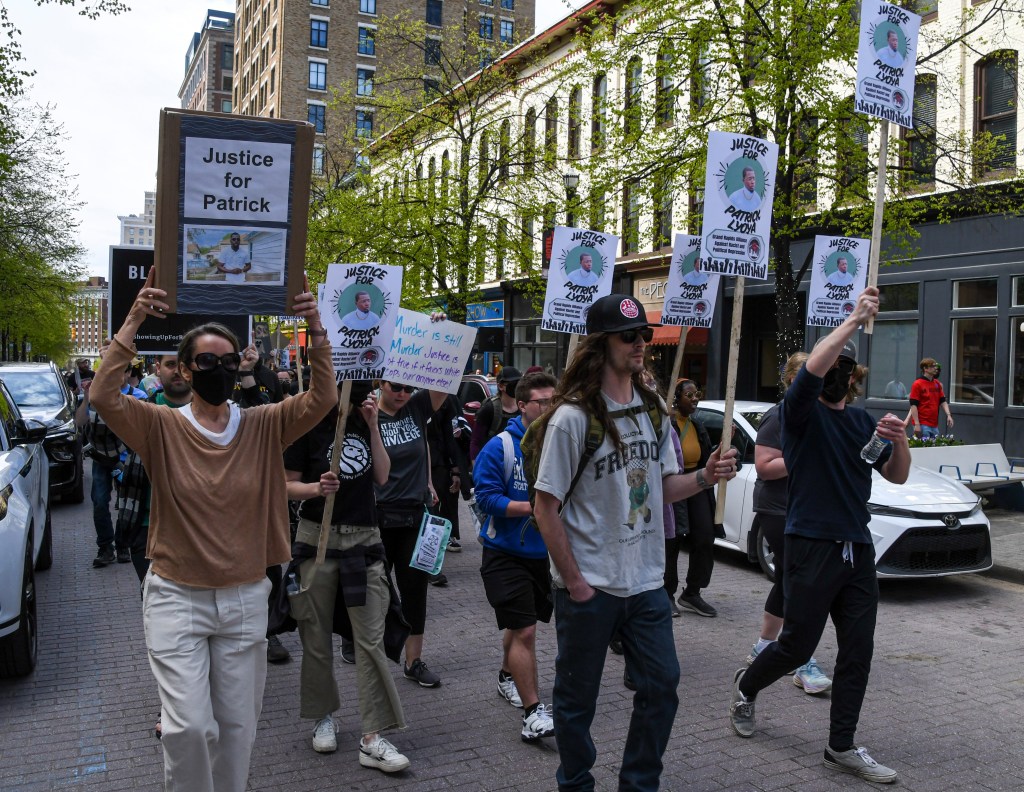
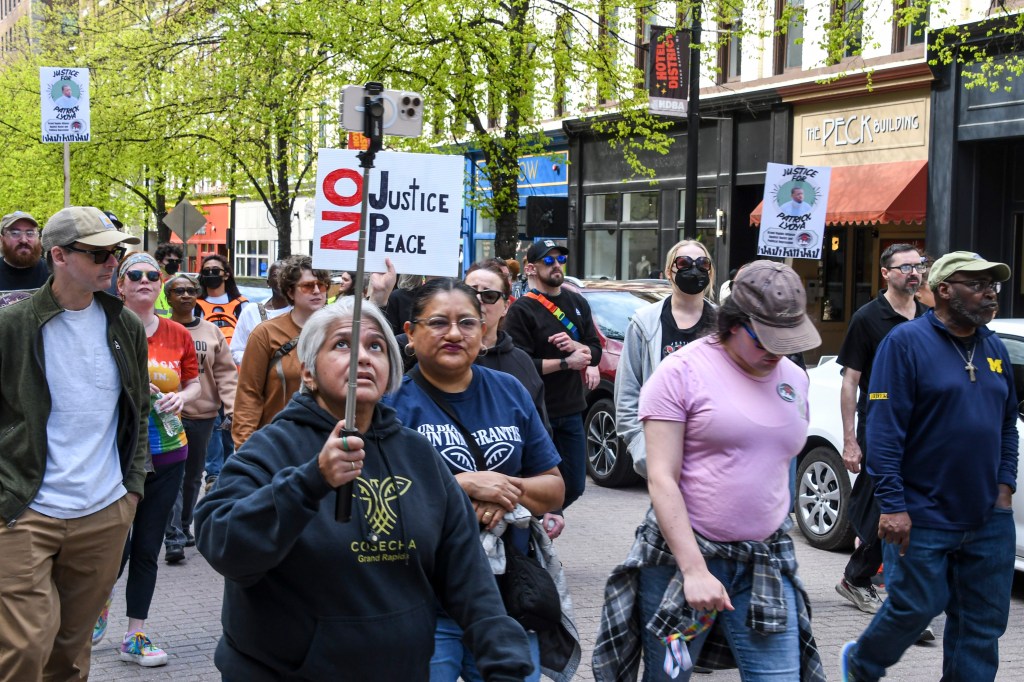
GRAND RAPIDS, MI — The streets of downtown Grand Rapids echoed with chants of “Justice for Patrick” on Sunday as more than 100 protesters gathered in a show of solidarity ahead of a long-awaited murder trial.

Demonstrators rallied outside the Kent County Courthouse to honor Patrick Lyoya, a 26-year-old Congolese immigrant who was fatally shot by former Grand Rapids Police Officer Christopher Schurr in 2022. After nearly three years of court delays and public outcry, Schurr’s second-degree murder trial is set to begin Monday morning.

Lyoya was killed during a traffic stop on the city’s southeast side when Schurr pulled him over for a mismatched license plate. After a brief foot chase and a struggle over a Taser, Schurr who is white shot Lyoya — who was unarmed — in the back of the head.

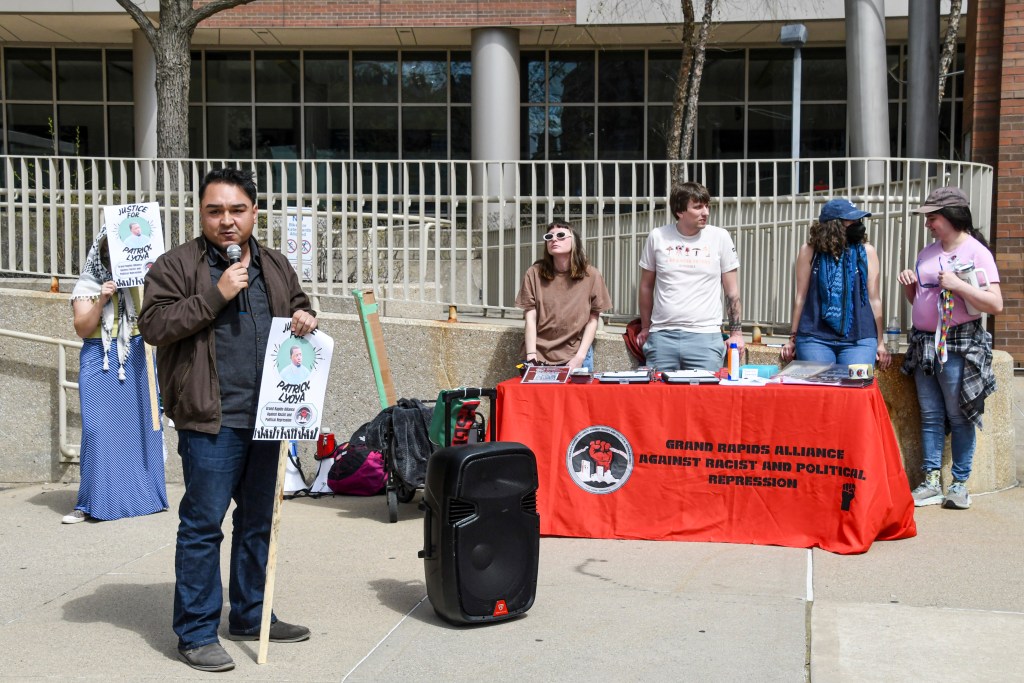
Sunday’s protest was organized by the Grand Rapids Alliance Against Racist and Political Repression. Speakers included Ivan Diaz, a former Kent County commissioner now running for the Michigan Senate, and Robert Womack, a current county commissioner.

“Convicting Schurr will be a victory for Patrick’s family, but the fight doesn’t end there,” said Sam Tunningley, a leader with the organizing group. “Justice means reforming a system that allows this to happen.”

Protesters also remembered other recent tragedies involving local law enforcement, including the deaths of Riley Doggett and Samuel Sterling. The community’s frustration was palpable, with many voicing concerns that justice continues to be delayed or denied for marginalized groups.

“If it can happen to Patrick, it can happen to any of us,” Diaz warned, criticizing rhetoric that blames victims for their own deaths.

After the rally, the group marched through downtown, stopping in front of the Grand Rapids Police Department and chanting, “No justice, no peace! Justice for Patrick!” Many in the crowd expressed demands not only for justice in Lyoya’s case but for broader systemic change.

As Schurr’s trial begins, protesters vow to keep up the pressure — not just for a conviction, but for meaningful reform.

Demonstrations are set to continue Monday morning, with protesters gathering in front of the courthouse as opening statements get underway.

A separate rally is also planned at 8:30 a.m. at Calder Plaza where State Representative James DeSana (R-Carleton) will  introduced a bill that would grant police officers expanded “qualified immunity,” potentially shielding them from lawsuits — a move that critics say would make achieving justice in cases like Lyoya’s even harder.