Community Gathers in Solidarity with Lyoya Family as Calls for Justice Grow Louder in Grand Rapids

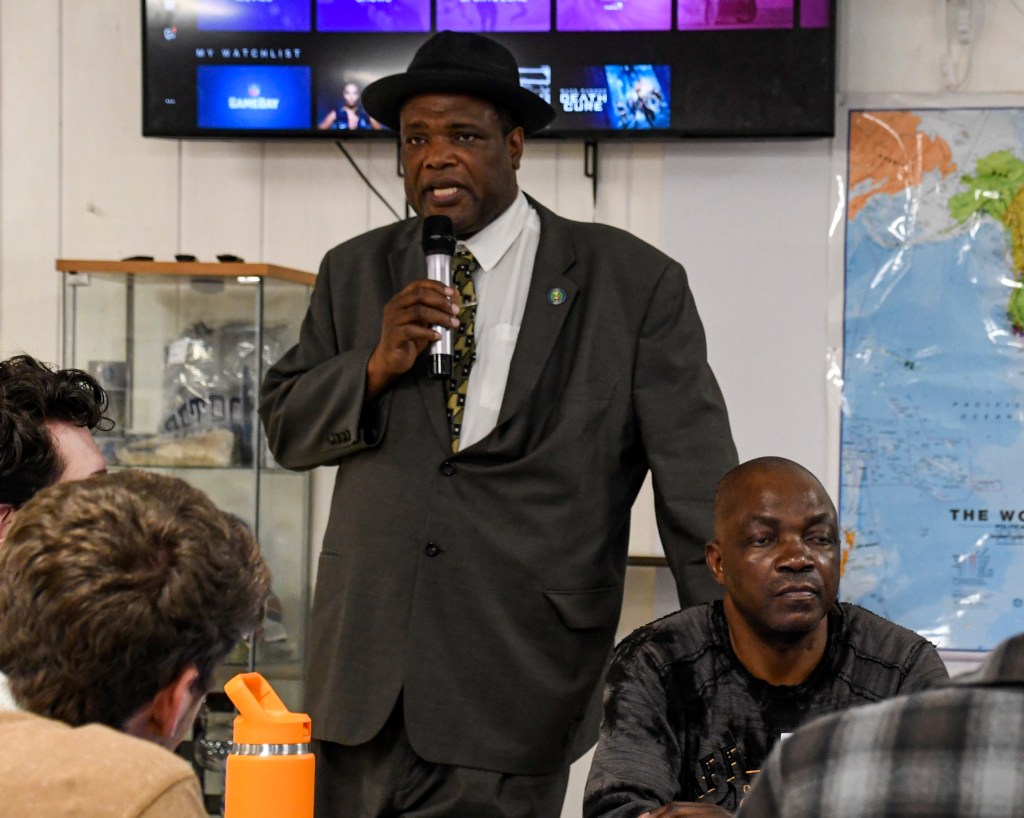
Robert S Womack addressing the crowd at the Meet and Great with the Lyoya family

Grand Rapids, MI — Over 50 people gathered Wednesday night May 15, 2025, at Hero’s Shero’s Corner for a grassroots meet-and-greet with the Lyoya family—three years after 26-year-old Patrick Lyoya was killed by a Grand Rapids police officer during a traffic stop gone violently wrong. The event, organized by community members and activists, offered space for collective grief, shared struggle, and renewed demands for justice.

“We and the Lyoya family are the working-class families that will continue to stand up until change has come,” echoed one of the grassroots organizers to the room of supporters. “No matter how dark the night, we can rebuild the day. Step by step, voice by voice, in peace, together.”

Peter Lyoya, Patrick’s father, stood before the crowd with heavy emotion in his voice.

“My son is three years underground,” he said. “And the man who killed him is still with his family. That is not justice.”
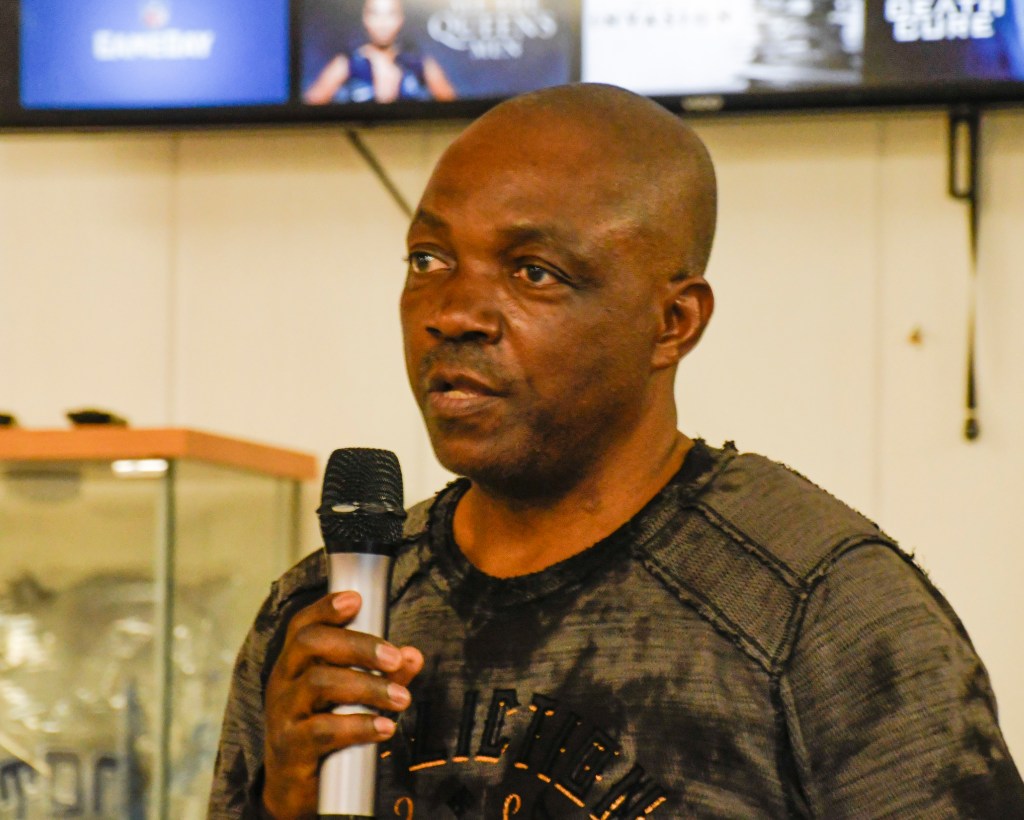
Peter Lyoya Father of Patrick speaking at a meet and great for the family

The recent trial against Officer Christopher Schurr ended in a hung jury. Though Schurr was not acquitted, he also was not convicted, leaving the Lyoya family devastated and community members frustrated.

“We were heartbroken,” Peter continued. “But we will not stop. We will keep fighting until there is justice for Patrick.”

The gathering was as much a vigil as it was a rally. Speakers included Robert S. Womack, Kent County Commissioner, who praised Peter Lyoya for his courage and resilience.

“There were many days I didn’t know how Peter kept going,” said Womack. “This has been a traumatic ordeal for the family—to have to watch that video again and again in court… It’s unbearable. But Peter has not stopped. None of us have.”

Womack noted that conversations with local officials about police reform are ongoing, but emphasized the importance of community-led efforts.

“This was not just a meet-and-greet,” Womack said. “This was about building solidarity. Healing for the family. And it was about saying: ‘Where do we go from here?’”

Members of the Grand Rapids Alliance Against Racist and Political Repression reiterated their demands for an immediate retrial of Officer Schurr and the dismissal of charges against local activists arrested during protests.

“We showed up every day during the trial—bringing water, snacks, support, whatever was needed,” said a representative. “We’ll continue to show up—not just for the Lyoya family but for every family impacted by police violence in Grand Rapids.”

Tom Burke, president of the local stagehands union and co-chair of the local May Day committee, didn’t hold back.

“This trial was a farce. Justice wasn’t served,” said Burke. “If one of us killed a cop, we’d be locked up in seconds. But when the roles are reversed, it takes three years to even get to court—and the system still fails us.”

Burke called for broader systemic reforms, including community control of the police, pointing to reforms happening in places like Chicago, where elected civilian oversight boards are beginning to reshape local policing.

Former Kent County Commissioner and State Senate candidate Ivan Diaz was blunt in his criticism of the justice system, the city leadership, and the culture of policing.

“If it can happen to Patrick, it can happen to any of us,” Diaz warned. “This is about systems of oppression—about a police department that believes it can be judge, jury, and executioner.”

Diaz recounted recent protests, during which police used bicycles to push peaceful demonstrators and even flipped a wheelchair-bound activist. He described being pepper-sprayed while filming the protest live on social media.

“Some of our officials are waiting for the trial to finish before they change policy,” he said. “But we can’t wait. Every day we delay is another day a tragedy could occur.”

Diaz outlined specific policy failures revealed during the trial—such as a lack of requirements to warn suspects before shooting, and no clear guidelines for foot pursuits.

“You can say your policies ‘respect the sanctity of human life’ all you want,” Diaz said. “But if those policies still allow officers to kill without warning, nothing has changed.”

Several speakers connected Patrick Lyoya’s death to broader movements for racial justice, immigrant rights, and working-class solidarity.

“This isn’t just about Patrick,” said Tom Burke. “It’s about every system that preys on poor people, on Black people, on immigrants.”

Burke spoke of the historical legacy of racist policing and the need for community power—not just performative politics.

“These politicians—we can’t rely on them to do the right thing,” he said. “They’ll listen to us and then break our hearts. But we have the power to build movements that change everything.”

He recalled meeting organizer Israel Siku at the first protest in Boston Square after Patrick’s death, and the long journey it’s taken to even get the case to trial.

“I told Israel it would take two years to get justice, and here we are three years later,” Burke said. “But we’re still here. And we’ll keep being here.”

Peter Lyoya closed the event with simple, powerful words.

“I don’t know if justice exists in America,” he said. “But I know we will keep fighting. For my son. For your sons. For all of us.”

The room responded in unison:

“Justice for Patrick. Justice for Patrick. Justice for Patrick”

The Lyoya family, along with their community of supporters, continues to demand a retrial of Officer Schurr and substantive reform within the Grand Rapids Police Department.

But more than anything, they are demanding to be heard—not as an afterthought, but as participants in shaping the systems that govern their lives.

“We are the voices with boots on the ground,” one speaker declared. “We may never be allowed at the table of the bourgeoisie—but we’ll build our own table, and we’ll make it louder.”

If you want to support the Lyoya family or stay updated on justice efforts in Grand Rapids:**

Follow the Grand Rapids Alliance Against Racist and Political Repression

Attend upcoming City Commission meetings and rallies

Demand transparency and accountability from local officials

As the community chanted Wednesday night:

“No justice, no peace.”

And they mean it.

“Picket the Plaza” Draws Crowds to Calder Plaza in Protest of Trump Policies

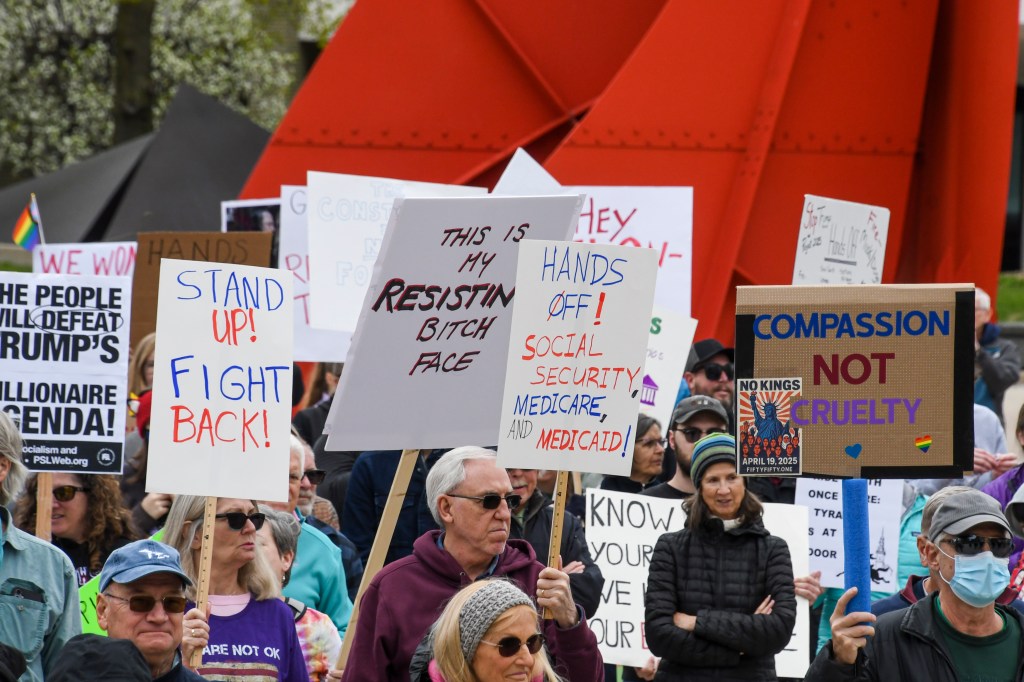
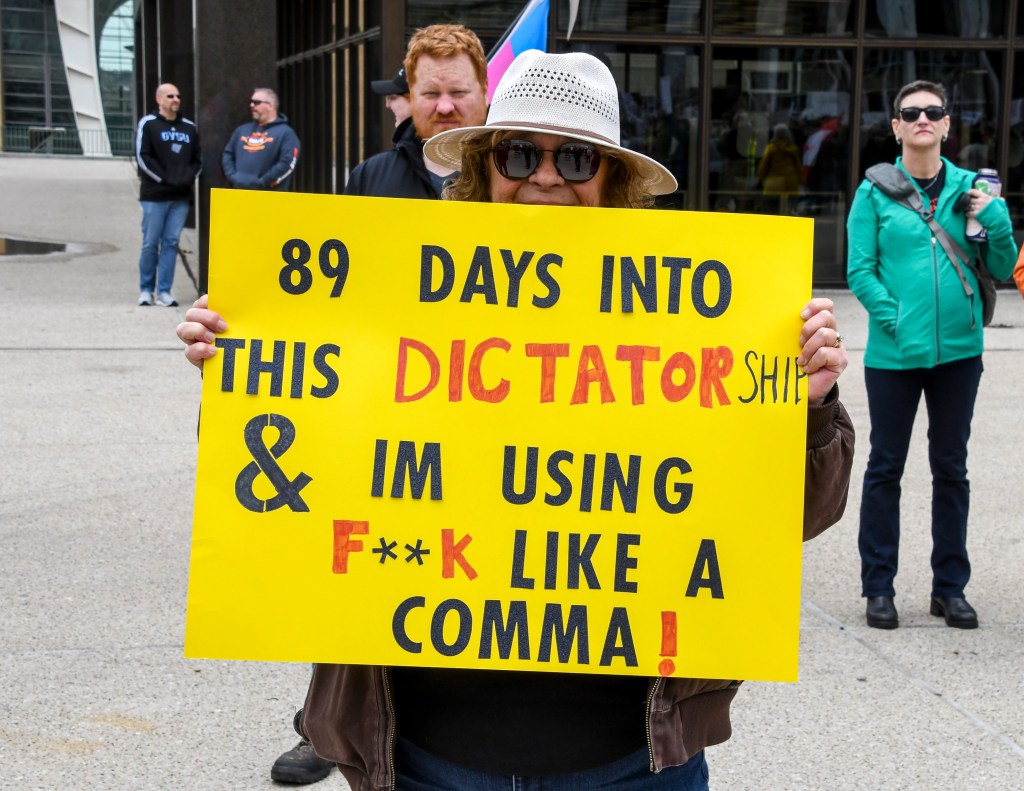
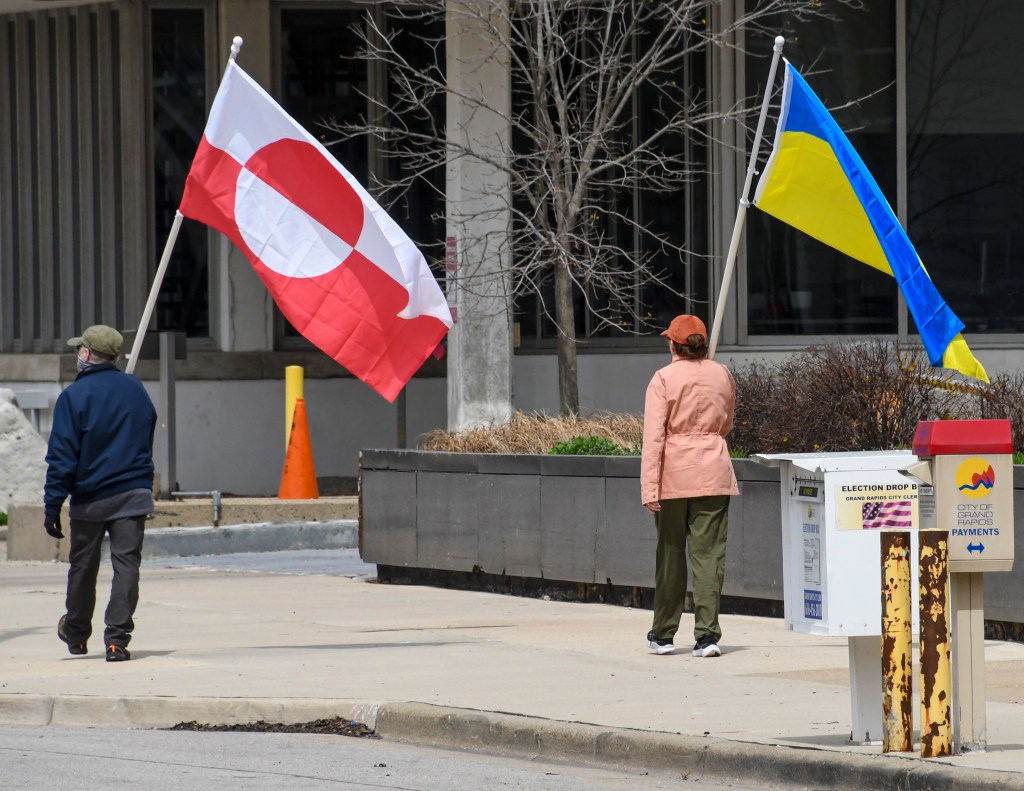
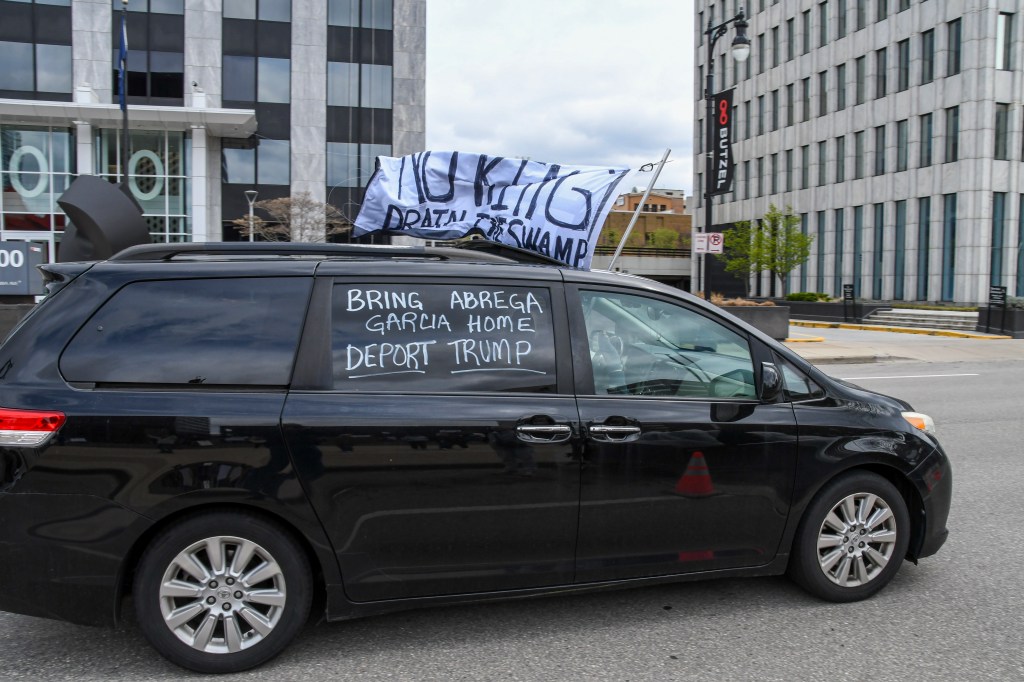
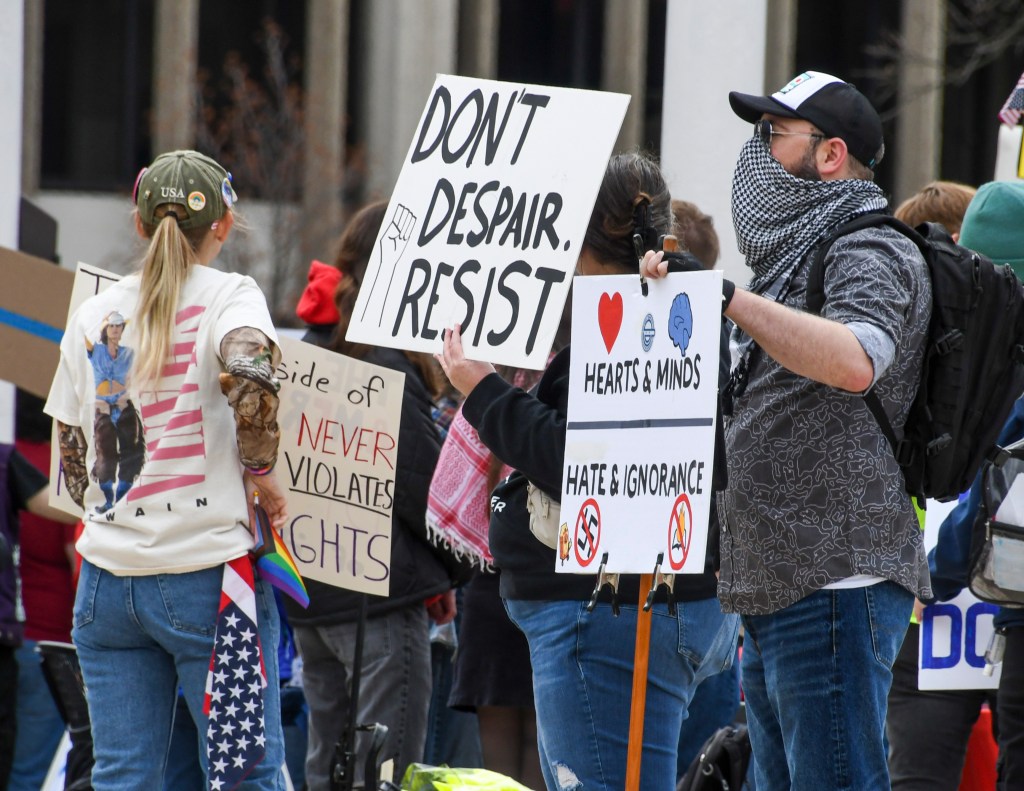
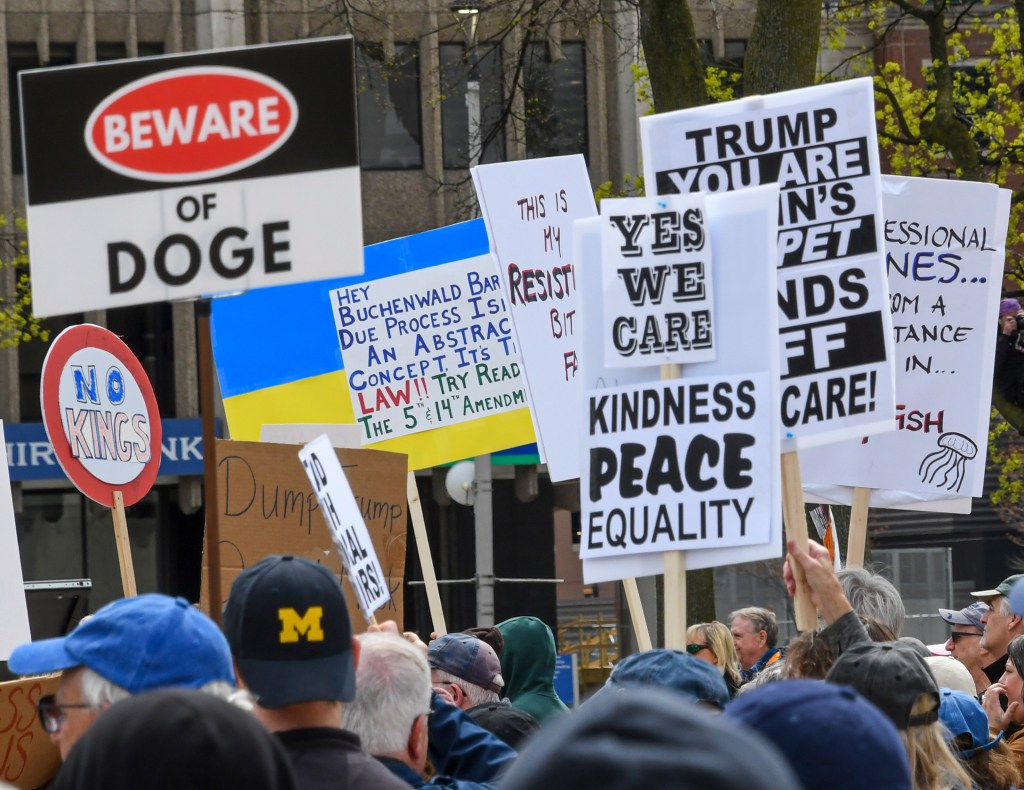
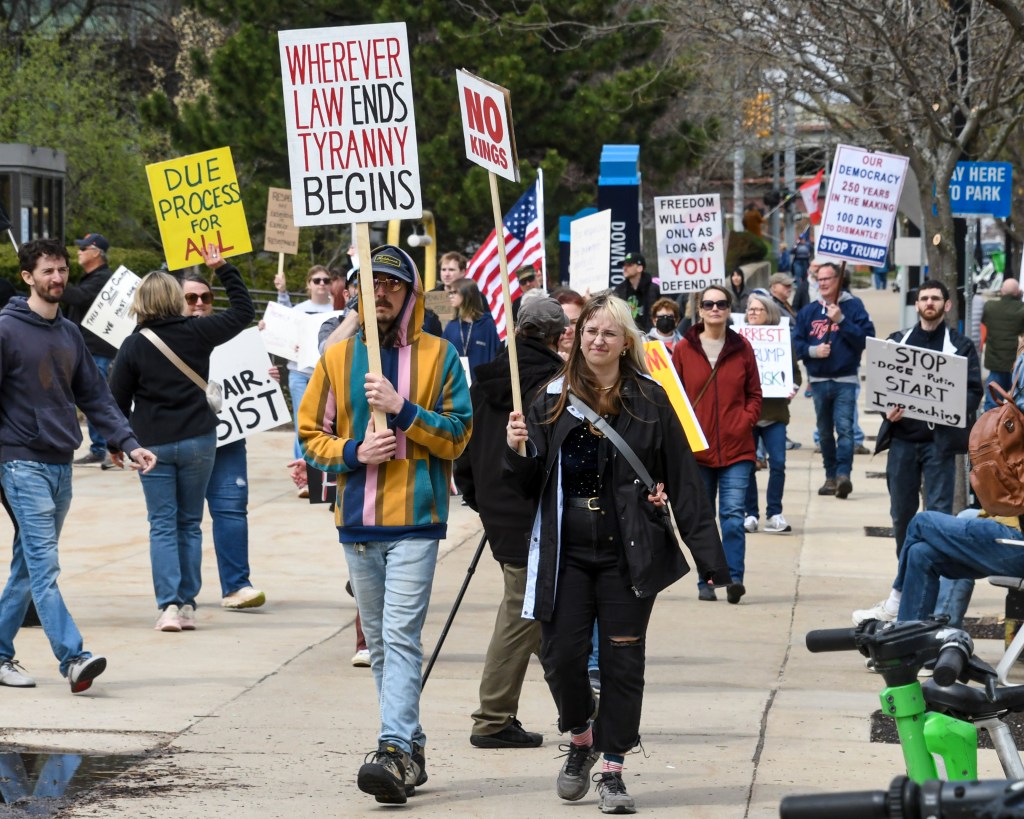
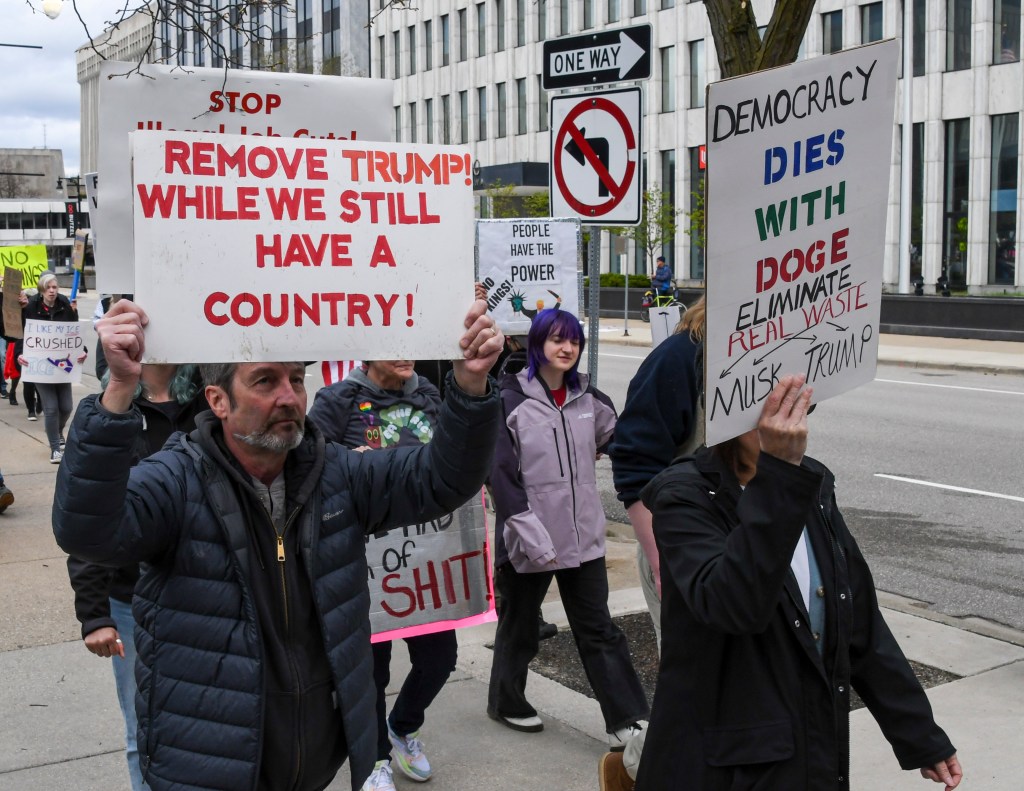
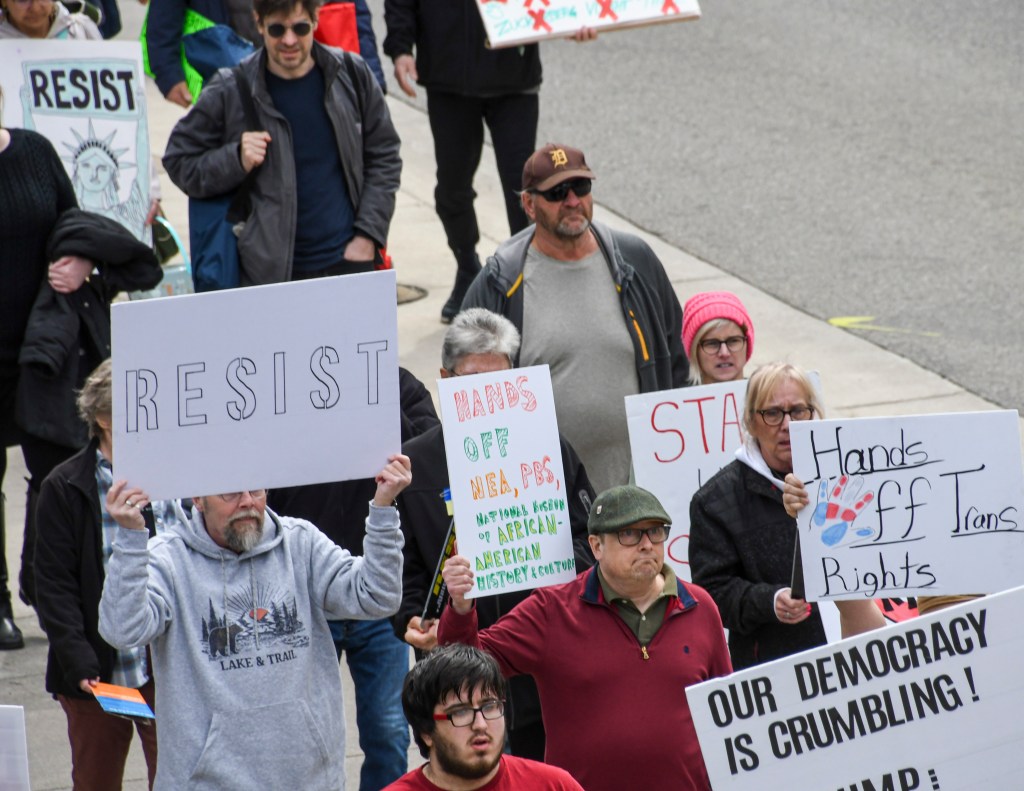
Grand Rapids, MI — Hundreds of voices rang out across Calder Plaza on Saturday afternoon April 20, 2025 as demonstrators gathered for “Picket the Plaza,” a protest against the Trump administration and what many described as a troubling direction for the country. The event, part of a nationwide day of action, drew people from all walks of life to downtown Grand Rapids in a unified call for justice, accountability, and the protection of civil rights.

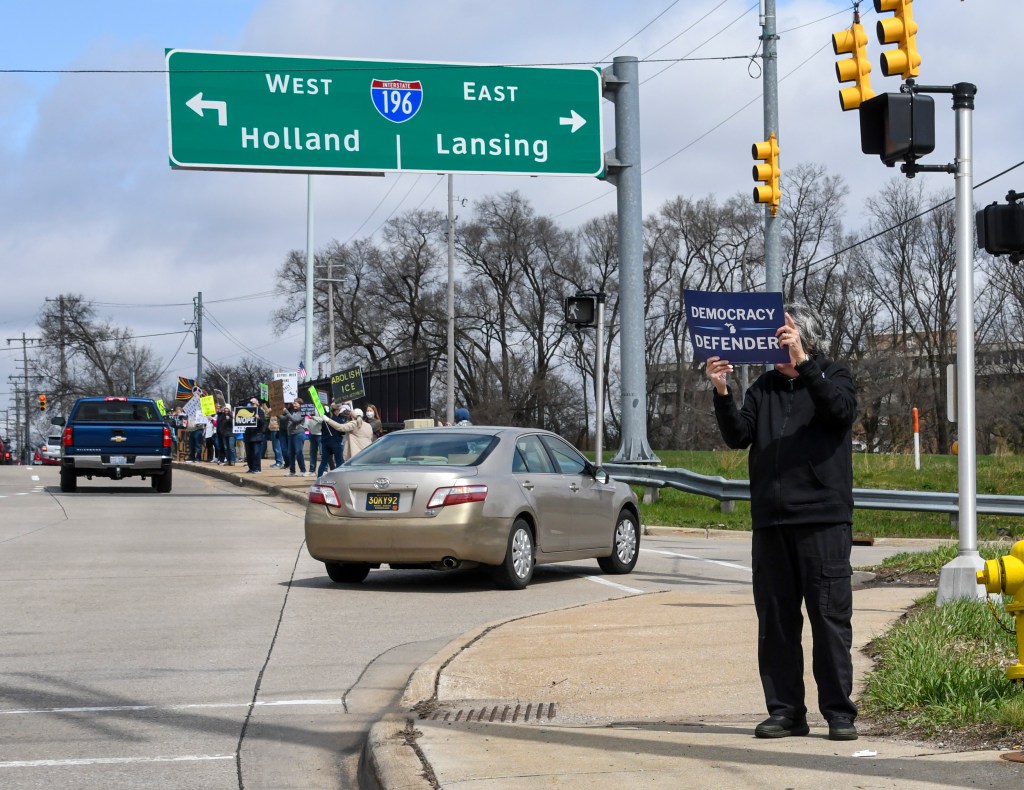
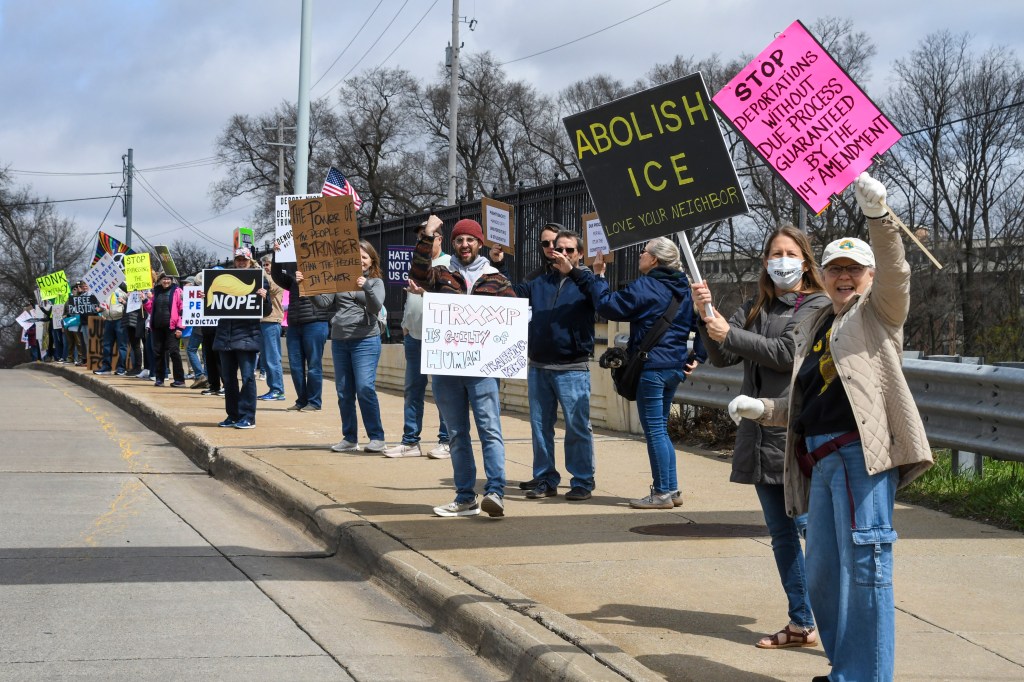
Beginning with a powerful visual display, protesters lined bridges over Grand Rapids’ highways at noon, holding signs and waving to honking cars below. After an hour of peaceful bridge demonstrations, the crowd convened at Calder Plaza where the energy only grew louder.

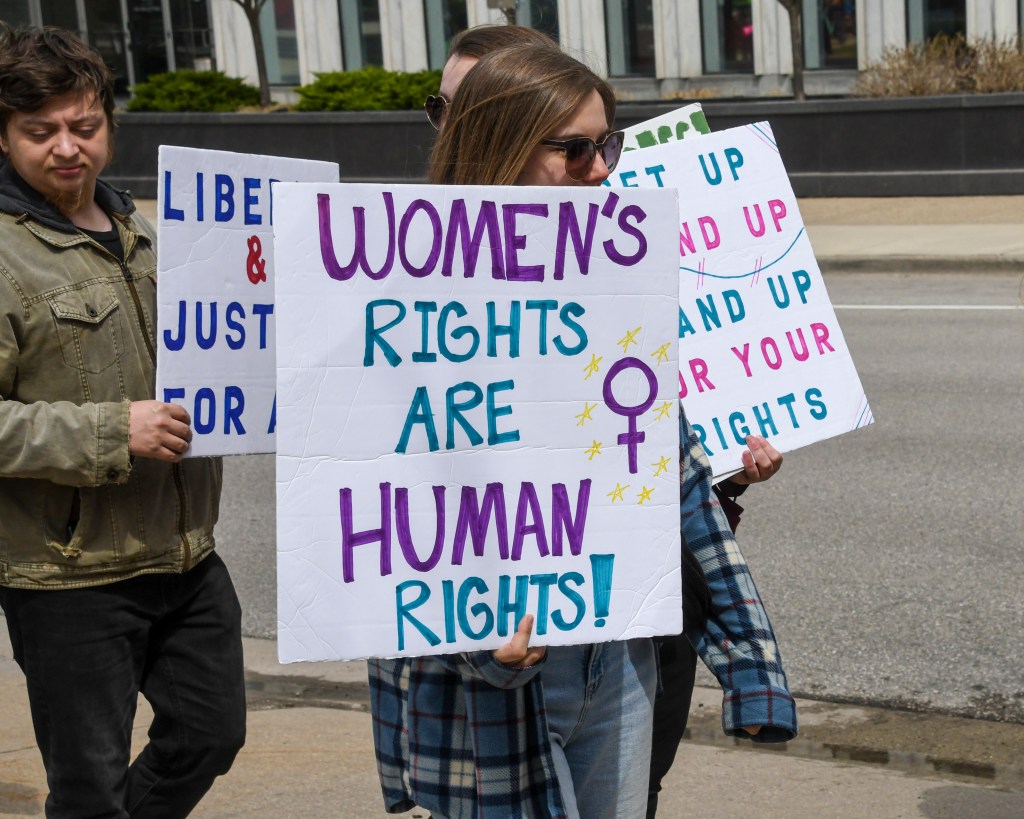
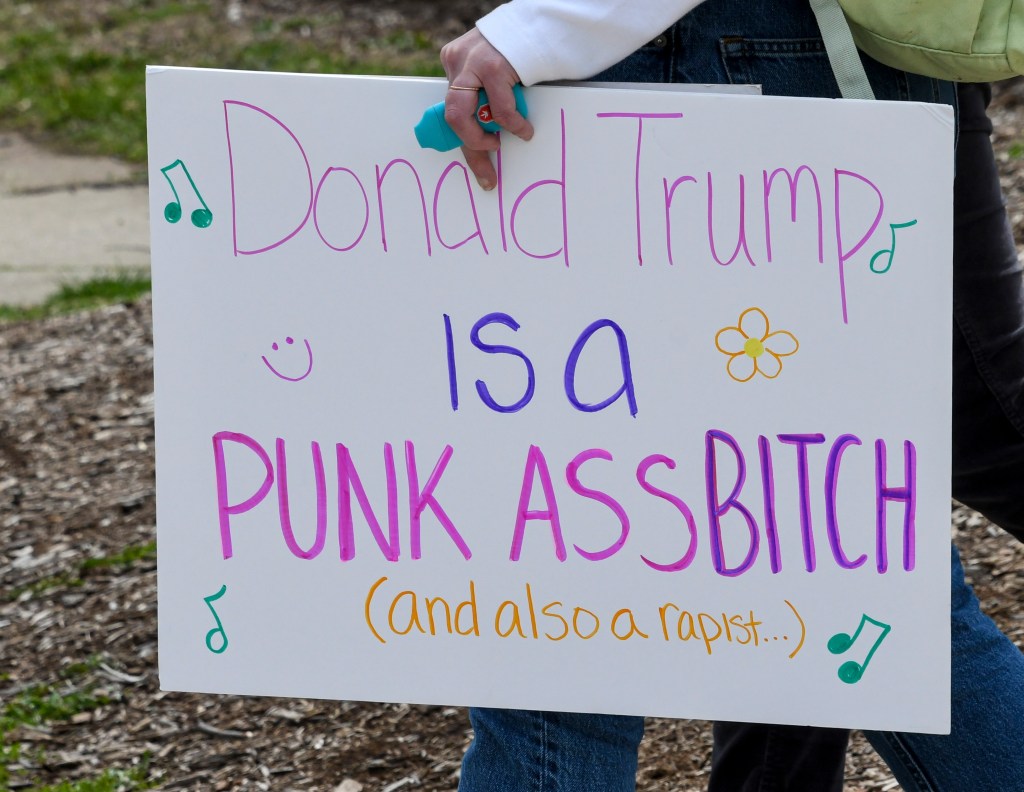
Messages of hope, frustration, and resistance filled the air, with signs bearing slogans like “Make love more contagious than measles,” “Disarm DOGE,” and “Everyone is innocent until proven guilty.” The chants echoed through the city blocks: “Hey hey, ho ho, Donald Trump has got to go,” and “Trans rights are human rights.”

“I care about everybody,” said protester Dee Jones, eyes filled with determination. “There’s a lot of injustice, inequities, and unethical things happening not just globally, but right here in the U.S. I’m sad. I’m disappointed. I’m angry. But I can do something. I can lead, and that’s why I’m here.”

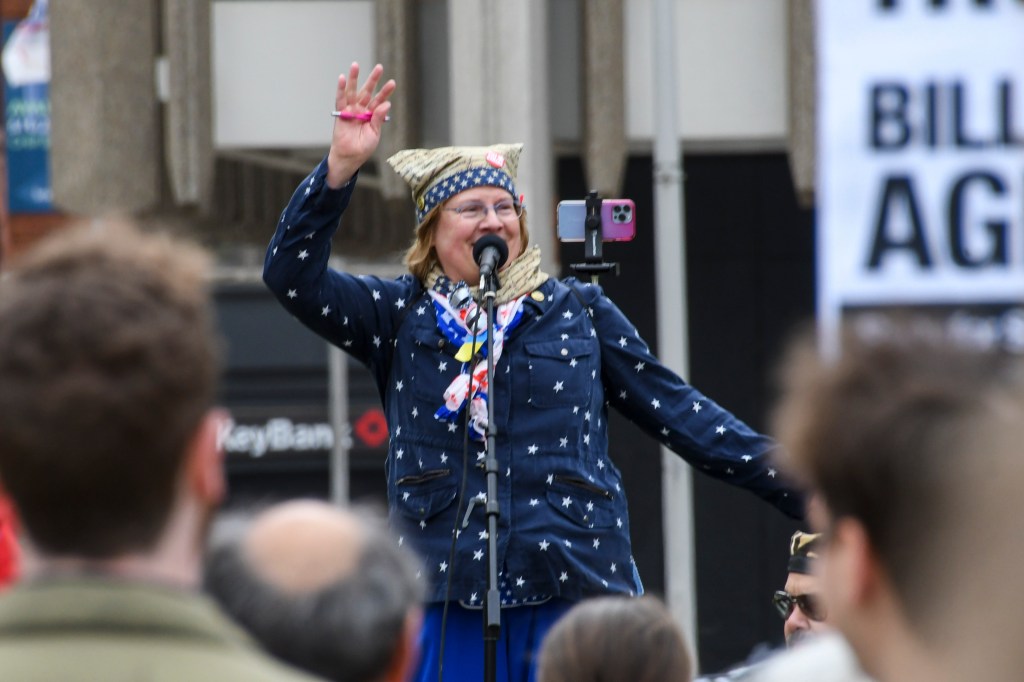
Speakers took the stage to voice deep concern over President Trump’s influence and the direction of the Republican Party. Organizer Karen Dunnam didn’t mince words: “What’s going on in the Trump regime is not normal. It needs to be stopped, adjusted, rearranged—made palatable.”

Many attendees admitted it was their first time protesting, driven by what they see as an urgent need for action. Fear of rising authoritarianism and threats to democratic norms brought them out of their homes and into the streets.

From the bridges to the plaza, from chants to speeches, the message was clear: silence is not an option. As many people boldly declared, “It’s not the time to stay home—it’s time to take action.”

Transgender Unity Rally Draws Hundreds to Michigan Capitol Amid Executive Order Concerns

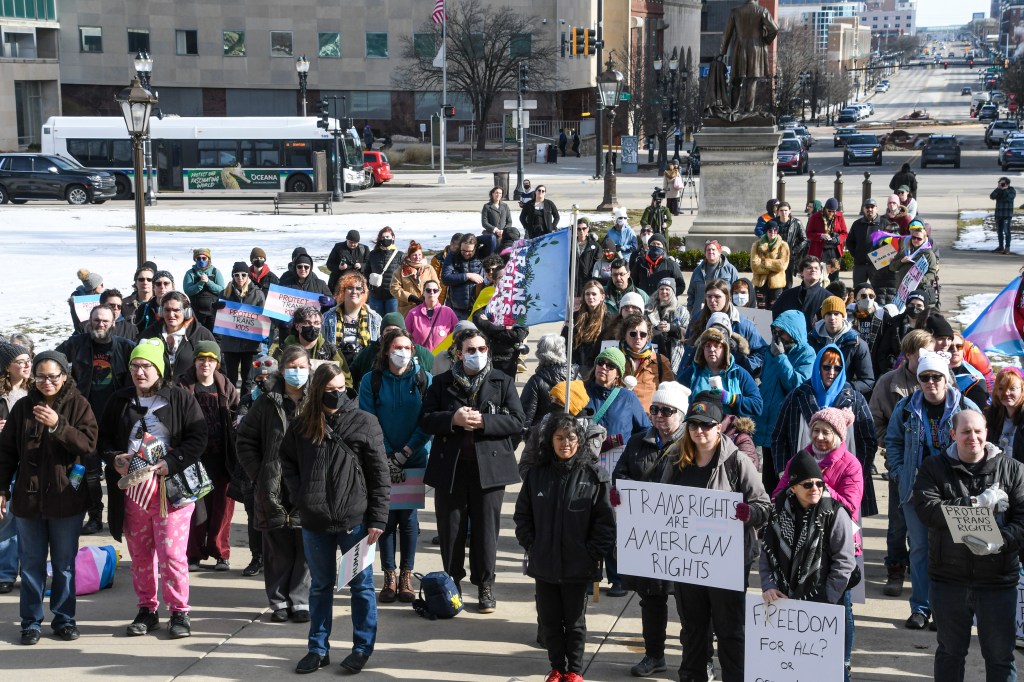
LANSING, MI – A powerful display of transgender solidarity unfolded at the Michigan State Capitol on Thursday as more than 200 people gathered to voice their concerns over recent executive orders by President Donald Trump. The rally, organized by the Transgender Unity Coalition, was one of nine held nationwide to protest policies that activists say threaten the rights and well-being of transgender individuals.

Concerns Over Executive Orders

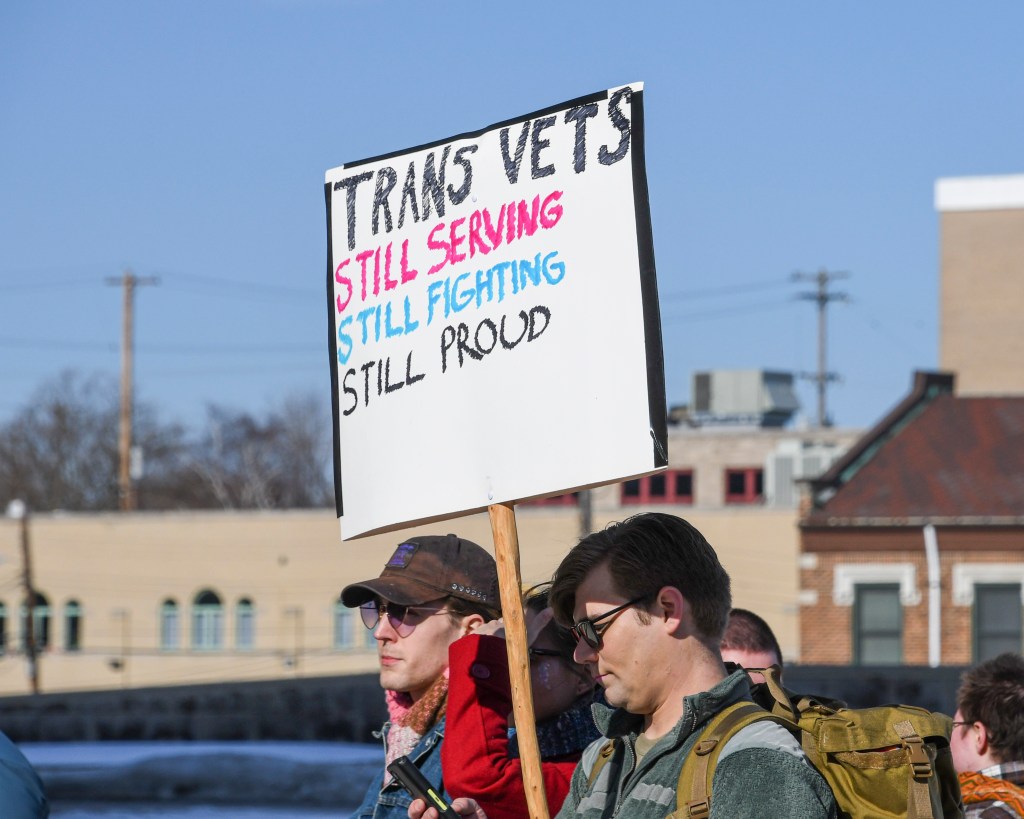
The executive orders in question include measures that cut federal support for gender-affirming health care, limit legal recognition of gender identities beyond male and female, and restrict transgender individuals from serving in the military. Rally leader Mallory Fournier spoke passionately about the fear and uncertainty these policies have created within the transgender community.

“We’re concerned for our access to health care. We’re concerned for our existence in society,” said Fournier. “If the federal government isn’t there to protect us and is actively trying to erase us, then some of our transgender siblings won’t be able to make it with us.”

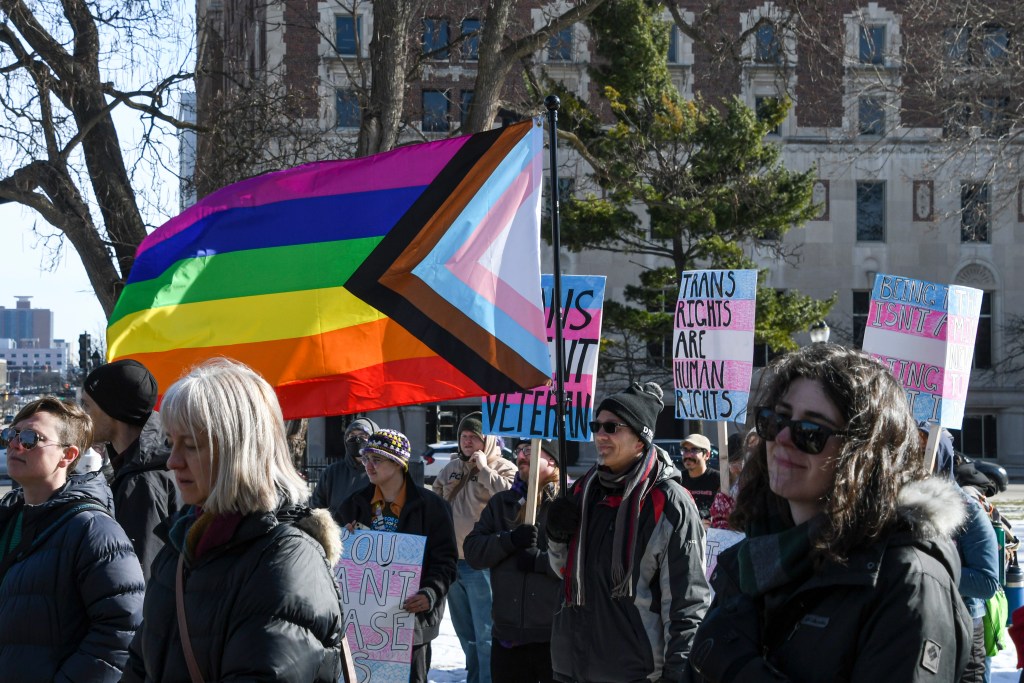
Photos from the Rally

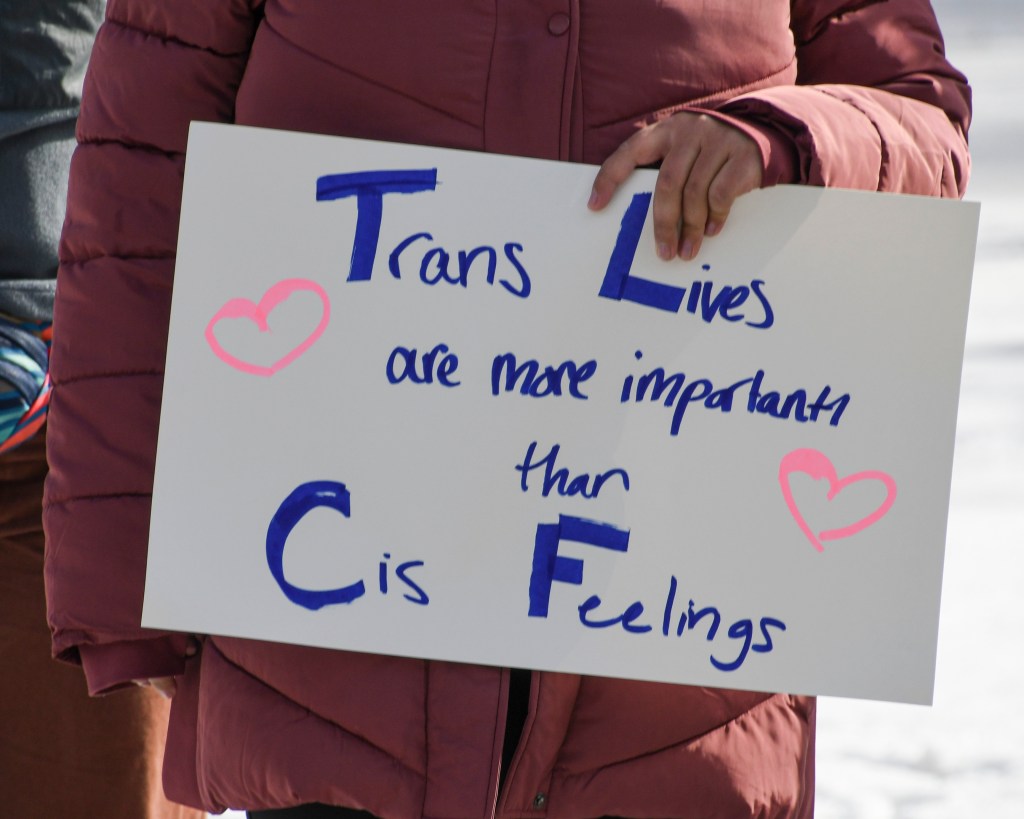
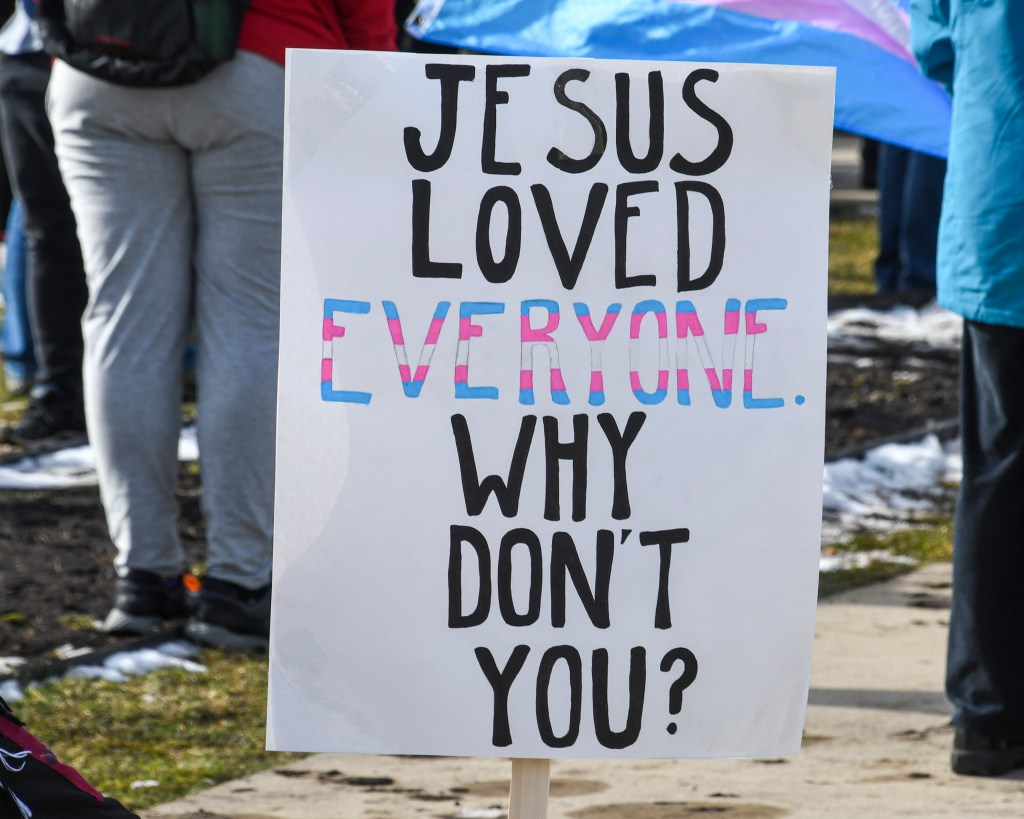
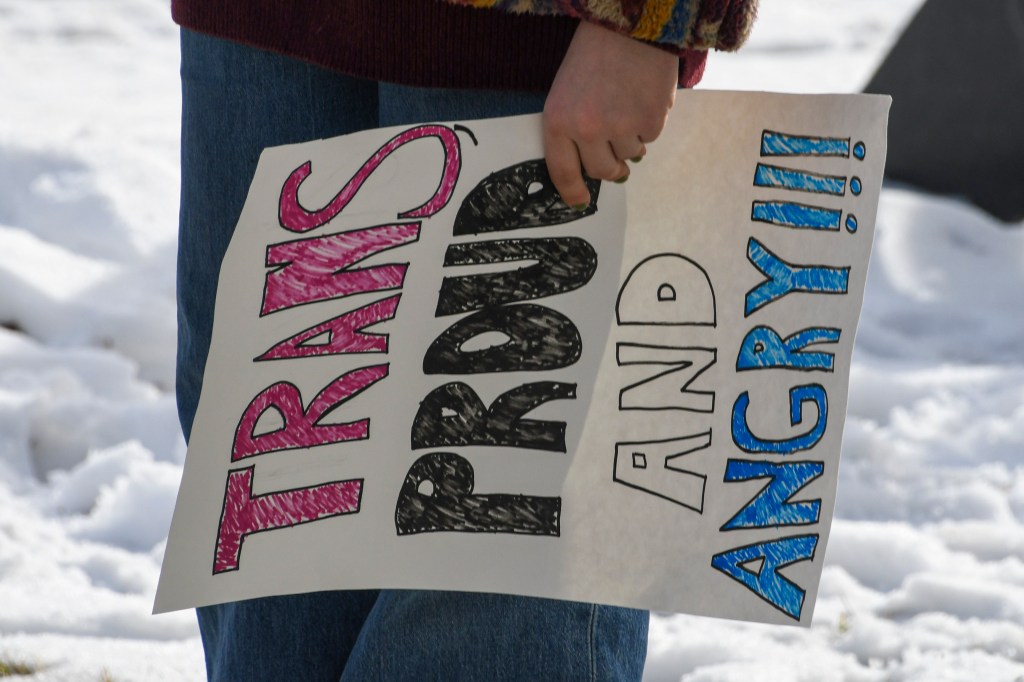
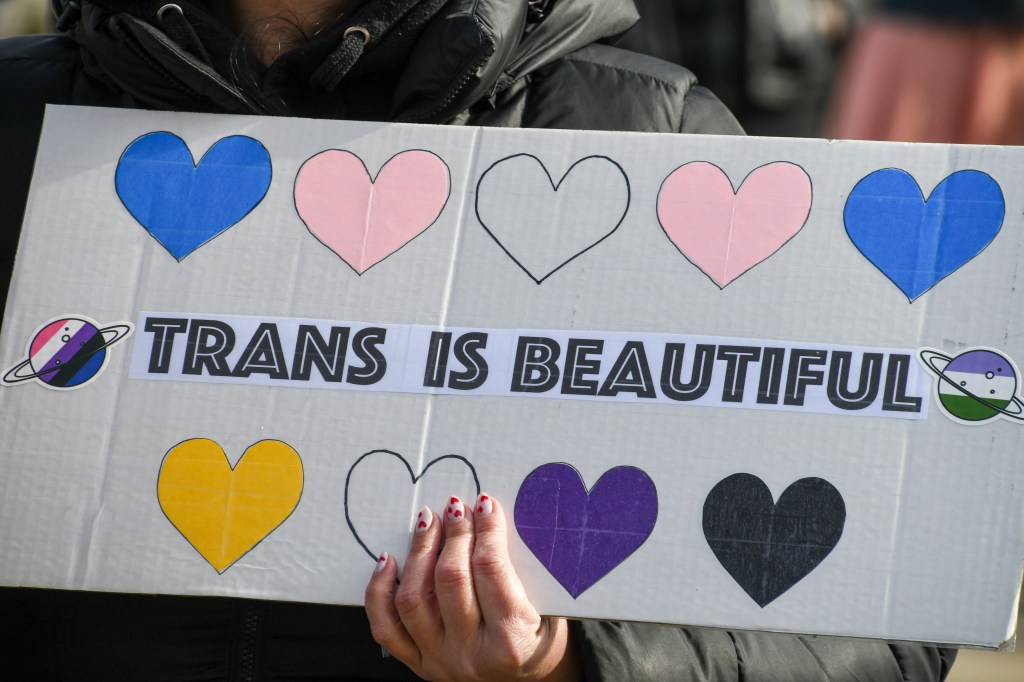
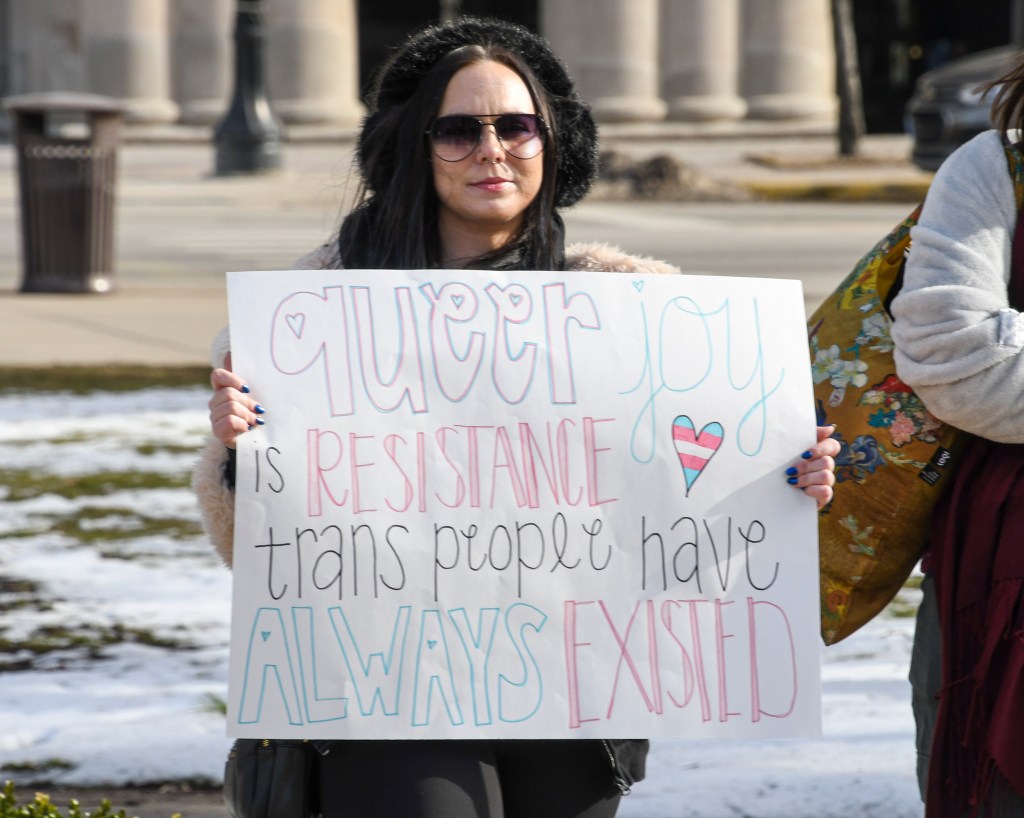
The rally featured signs with messages of support, pride flags waving in the wind, and powerful moments captured on the steps of the Michigan Capitol.

Testimonies from the Community

The rally featured a series of speeches from transgender individuals and their allies. Many shared personal stories about how the executive orders could affect their lives. Alexandra Hulscher, a volunteer with the advocacy group Trans Unity, emphasized the importance of feeling seen and supported.

“When you wake up in the morning feeling like yourself, you want to stay that way,” Hulscher said, highlighting the emotional and psychological toll of restrictive policies.

Taylor Bumgardner, another speaker, stressed the life-or-death importance of gender-affirming health care.

“I think access to gender-affirming care is literally life or death,” said Bumgardner. “It’s impossible to live uncomfortably in your own body, and that’s why everyone should have the right to exist as they are.”

Waabano Mandosking, who traveled from Sault Ste. Marie to attend, drew on her Indigenous heritage for strength.

“As a trans person and also an Indigenous person, it doesn’t feel good obviously,” Mandosking said. “I just keep reminding myself my ancestors persevered through worse administrations, and we survived.”

A Clash of Views

The rally was not without opposition. A small group of counter protesters, including members of Turning Point USA’s Michigan State University chapter, voiced support for the executive orders. Alex Bitzan, the group’s president, defended the federal government’s position.

“The idea that people can just be whatever they want to be without having to be accountable to objective reality is a fundamentally harmful one,” Bitzan said.

Tensions flared at moments, but the rally remained largely peaceful, with the transgender rights activists maintaining their focus on unity and resilience.

Political and Community Support

State representatives Laurie Pohutsky (D-Livonia) and Emily Dievendorf (D-Lansing) were among those in attendance, showing support for the transgender community. Rep. Julie Brixie (D-Meridian Twp.) also addressed the crowd, recalling her role in amending the Elliott-Larsen Civil Rights Act to protect LGBTQ+ Michiganders.

“We see you. We love you. We are protecting you,” said Brixie. “Do not give up. Engage, participate, join us, help us. You matter.”

The rally took place just two days after President Trump signed an executive order cutting federal support for gender-affirming care for minors. The move has sparked widespread criticism from LGBTQ+ advocates, who argue that denying health care to transgender youth is cruel and harmful.

A Long History of Struggle

Among the speakers was Grace Bacon, 84, widely regarded as the mother of Michigan’s transgender community. She founded Crossroads in 1977, the state’s first transgender support group. Bacon urged attendees to remain strong in the face of adversity.

“We’re being picked on, and we’ve been picked on, and it’s not gonna let up,” said Bacon. “Trump’s emboldened a lot of hatred toward all of us. And we’re all targets. But for the rest of you, you’re gonna come out of this eventually, and I hope we all do. We’re here to stay. We’re here; we’re queer; we’re gonna stay here.”

Hope and Resilience

Danny Jones, a nonbinary attendee, shared a deeply personal reflection on choosing hope over bitterness.

“It would have been so easy to walk through that door and to become bitter and cynical, but I don’t want to go through that door,” said Jones. “Hope is a choice. It’s something we can feed. It’s something we can put those logs on the fire and keep alive. And we can do that for each other.”

The rally closed with chants of solidarity and messages of perseverance. Organizers emphasized that this gathering was just the beginning of a continued effort to advocate for transgender rights and push back against restrictive policies.

“I hope that people know that there is a community,” Fournier said. “We’re here, we’re organizing, and we’re doing our best to combat any legislation that tries to erase us. Because we exist. We will still exist. And together, we can make it through this.”

The Transgender Unity Coalition confirmed that similar rallies were held Thursday in California, Colorado, Kentucky, Massachusetts, Ohio, Texas, Utah, and Wisconsin. The national effort aimed to unite the transgender community, assert their presence, and demand justice from elected officials.

As the sun set on the Capitol, one message remained clear: the fight for transgender rights is far from over, but the community remains steadfast in its determination to exist, resist, and thrive.